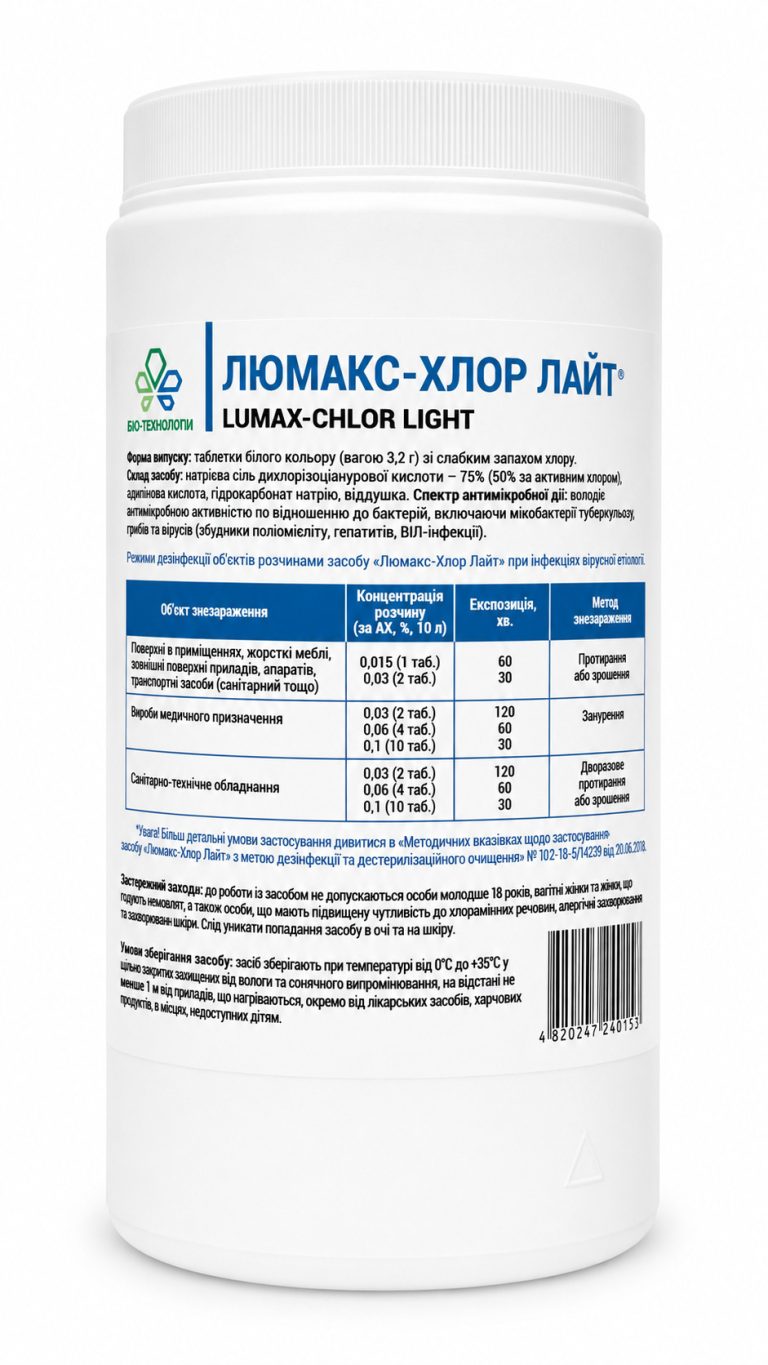
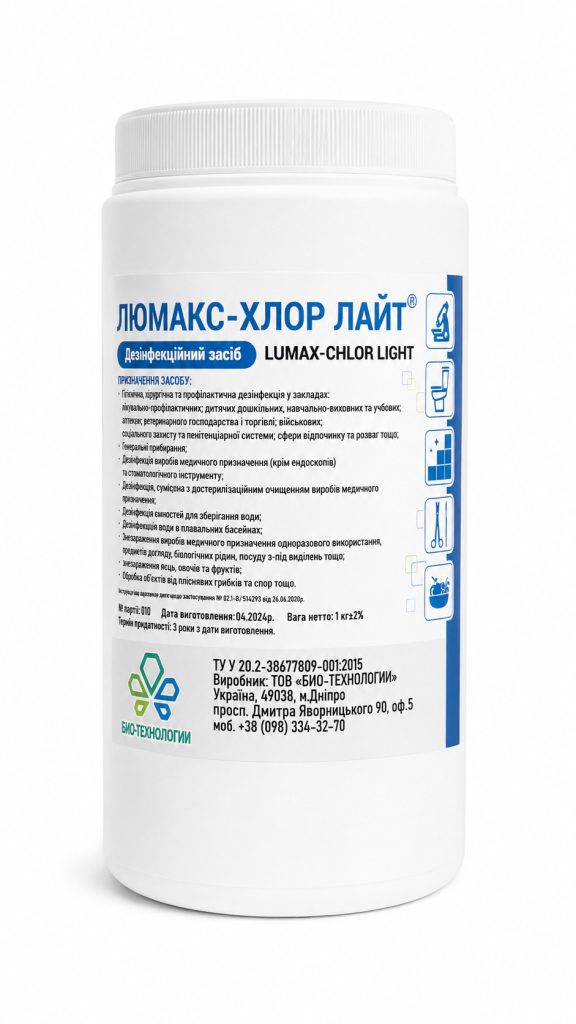
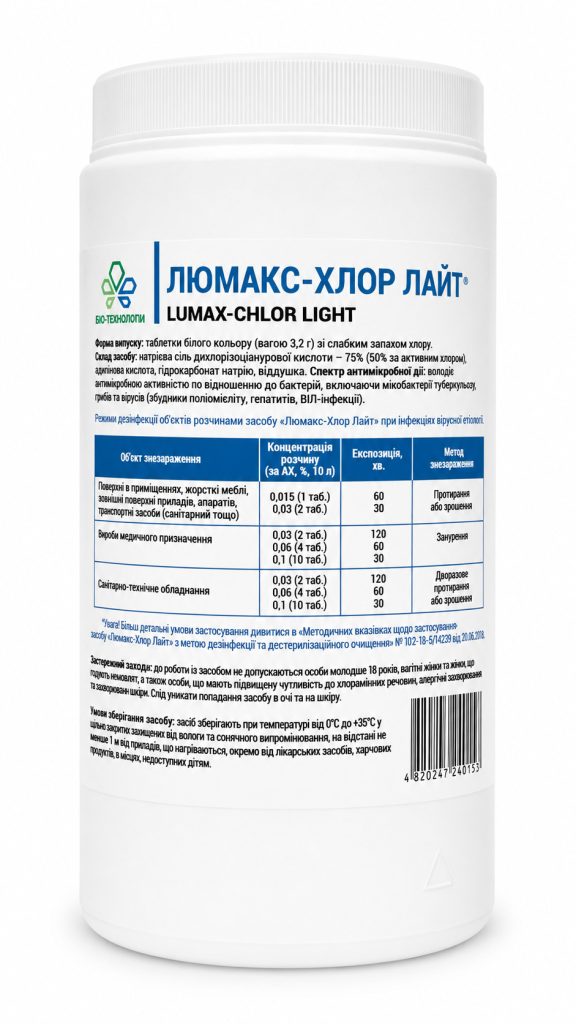
Full name of the product. Disinfectant “Lumax-Chlor Light”
Manufacturer: BIO-TECHNOLOGIES LLC, according to TU U 20.2-38677809-001:2015.
Composition of the product, content of active and auxiliary substances, wt.%: active substance: sodium salt of dichloroisocyanuric acid – 75.0% (50% available chlorine); auxiliary substances: adipic acid, sodium bicarbonate, fragrance.
Form of release and physicochemical properties of the product. The product is supplied as white tablets weighing 3.2±0.3 g, which dissolve readily in water. Dissolving one tablet in water releases 1.5±0.15 g of available chlorine.
Aqueous solutions are transparent and colorless, with a slight odor of chlorine and fragrance; they have detergent, wetting and bleaching properties, do not damage objects made of corrosion-resistant metals, glass, rubber, silicone, polymeric materials, wood, tile, porcelain and faience or surfaces of devices and equipment with galvanic, paint and polymer coatings; do not fix protein contamination, rinse off well and leave no deposits. The product does not burn, is explosion-safe, and is compatible with soaps, anionic surfactants, amphoteric and nonionic substances, and alkali-metal salts of inorganic and organic acids.
Intended use of the product. “Lumax-Chlor Light” is intended for:
– current and final disinfection in healthcare institutions, children’s institutions and foci of infectious diseases of bacterial etiology (including tuberculosis), viral etiology (including hepatitis, HIV infection, influenza, poliomyelitis, adenoviruses, Coxsackie viruses, ECHO viruses, rotaviruses, herpes, cytomegalovirus, etc.), fungal etiology (candidiasis and dermatophytosis), and in particularly dangerous infections (anthrax, plague, tularemia, cholera).
– preventive disinfection:
– – healthcare and treatment-and-prevention institutions of various profiles (surgical, therapeutic, obstetric departments, except neonatal departments, gynecological, physiotherapy departments, maternity hospitals, children’s and day hospitals, polyclinics, dental clinics and offices, hospitals, outpatient clinics, dispensaries, feldsher-midwife stations, organ transplantation centers, medical units and medical posts, emergency medical stations, pathological anatomy departments, sanatoriums, preventive treatment facilities, rehabilitation centers, social protection institutions, specialized medical centers, donor centers and blood transfusion departments, clinical, microbiological, biochemical, bacteriological, virological, serological and other laboratories, etc.);
– – pharmacy institutions (pharmaceutical warehouses, pharmacies, pharmacy stores, etc.);
– – preschool institutions, educational and training institutions of various accreditation levels;
– – enterprises of the perfumery and cosmetics, pharmaceutical, chemical, microbiological and food-processing industries;
– – restaurant and trade establishments (canteens, restaurants, shops, markets, etc.);
– – public utility and household service facilities (hotels, dormitories, campsites, apartments, hairdressing salons, beauty salons, cosmetology, manicure and pedicure rooms, piercing and tattoo salons, solariums, bathhouses, saunas, swimming pools, sports halls, cinemas, theaters, laundries, etc.);
– – transport infrastructure facilities (railway stations, stations, airports, etc.) and rolling stock of road, rail, water and air transport (passenger transport, sanitary transport, food transport, waste transport, ambulances, metro, etc.);
– – health-improvement institutions for adults and children (holiday homes, sanatoriums, preventive treatment facilities, rehabilitation centers, including functional diagnostics, physiotherapy and balneology rooms, homes for the elderly, etc.);
– – military units of the Ministry of Defence, Ministry of Internal Affairs and State Emergency Service;
– – leisure and entertainment facilities (cinemas, theaters, cultural and health-improvement complexes, etc.);
– – plants, factories, warehouses and storage facilities, including paper archives, library repositories, premises for storing grain, food, medicinal products, hygiene items, etc.;
– – social protection and penitentiary institutions;
– – warehouses and storage facilities (paper archives, library repositories, premises for storing grain, food, medicinal products, hygiene items, etc.);
– – public toilets, portable toilets and waste containers;
– – other epidemiologically significant facilities whose activities require disinfection work in accordance with applicable sanitary, hygienic and anti-epidemic standards and rules and regulatory documents;
– preventive disinfection and general cleaning in treatment-and-prevention institutions and at other facilities;
– disinfection combined with pre-sterilization cleaning of medical devices made of corrosion-resistant metals, glass, rubber, caoutchouc, polymeric materials, silicone and plastics (except flexible and rigid endoscopes and instruments for them);
– disinfection and simultaneous washing of room surfaces (floors, walls, doors, window sills, window frames), furniture, interior items, medical devices, apparatus and equipment with paint, galvanic and polymer coatings, patient care items, laboratory utensils, tableware, kitchenware and pharmacy utensils (including disposable utensils), food storage containers, linen, toys, sanitary equipment, cleaning tools, waste collection containers, rubber mats, bath sandals, leather footwear, slippers, sewage wells and drain pits, etc.;
– decontamination before disposal of used disposable medical devices, medical waste made of textile materials (textiles and disposable medical products), biological fluids and other contaminated secretions (blood, serum, mucus, sputum, saliva, vomit, feces, urine, rinsing water after gargling, wash water after washing a patient, food residues, etc.), and receptacles for secretions;
– disinfection combined with pre-sterilization cleaning of corrosion-resistant hairdressing, manicure, pedicure and cosmetic instruments and accessories at service enterprises;
– disinfection of medical instruments (except endoscopes and instruments for them), cosmetology instruments, etc.;
– pre-sterilization cleaning of medical instruments (except endoscopes and instruments for them), cosmetology instruments, etc.;
– decontamination of surfaces during disinfection measures at enterprises of the pharmaceutical, chemical, microbiological, biotechnological and perfumery and cosmetics industries, in laboratories, pharmacies, etc.;
– decontamination of room and equipment surfaces during disinfection measures at food industry enterprises (meat-processing, fish-processing, dairy, confectionery, bakery and beverage production enterprises, etc.), poultry farms and livestock complexes;
– water decontamination in decentralized water supply systems (well, artesian, spring-capture, river, lake, pond water, etc.);
– disinfection of water storage tanks and decontamination of water in swimming pools;
– decontamination of eggs, vegetables and fruit;
– treatment of objects against mold fungi and spores;
– disinfection of other epidemiologically significant facilities whose activities require disinfection measures in accordance with sanitary, hygienic and anti-epidemic standards and rules.
Spectrum of antimicrobial activity. “Lumax-Chlor Light” has antimicrobial activity against Gram-negative and Gram-positive bacteria (including Mycobacterium tuberculosis), viruses (including hepatitis B, HIV infection, poliomyelitis, adenoviruses, Coxsackie viruses, ECHO viruses, rotaviruses, influenza viruses, herpes, cytomegalovirus, etc.), fungi of the genus Candida and pathogenic dermatophytes
in particularly dangerous infections (anthrax, plague, tularemia, cholera).
Toxicity and safety of the product. According to acute toxicity parameters under GOST 12.1.007-76, “Lumax-Chlor Light” belongs to hazard class III, moderately hazardous substances, when administered into the stomach and to hazard class IV, low-hazard substances, when applied to the skin. It has no cumulative or sensitizing effect.
| There are no data |
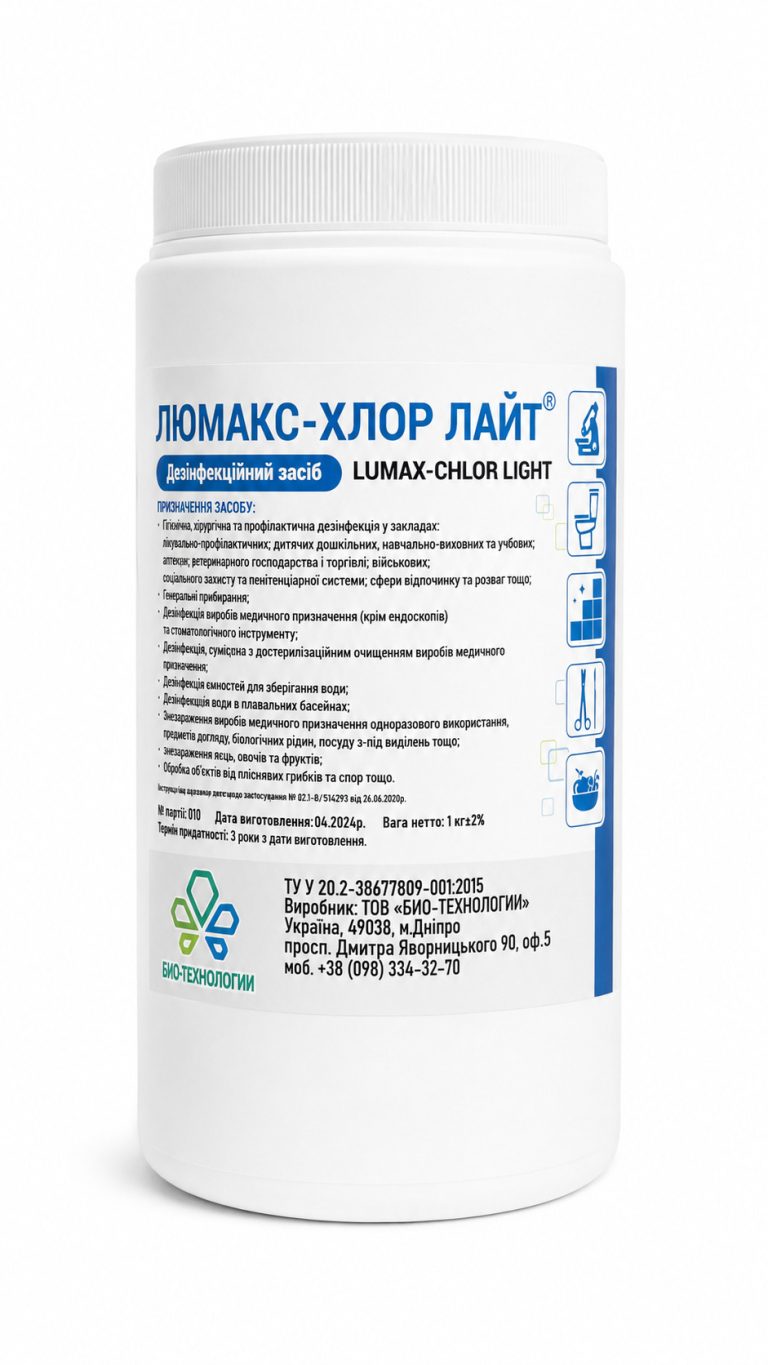
"Lumax-Chlor Light" is a chlorine-based tablet product for preparing working disinfectant solutions. It is used for treatment of surfaces, medical devices, utensils, linen, water, equipment, tools and other epidemiologically significant objects.
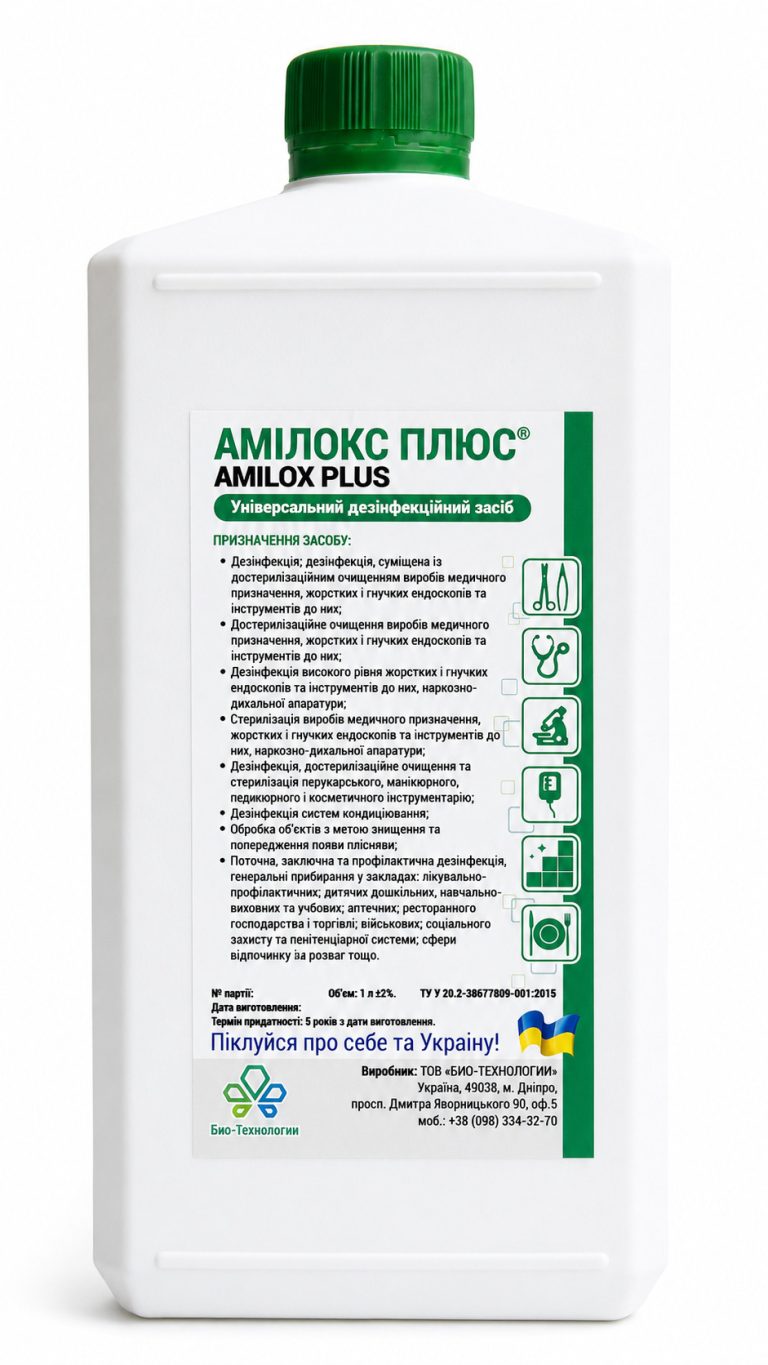
"Amilox Plus" is a concentrated disinfectant with detergent, wetting, deodorizing and emulsifying properties. It is intended for disinfection, pre-sterilization cleaning and sterilization of medical devices, surfaces, equipment, tools and other epidemiologically significant objects.
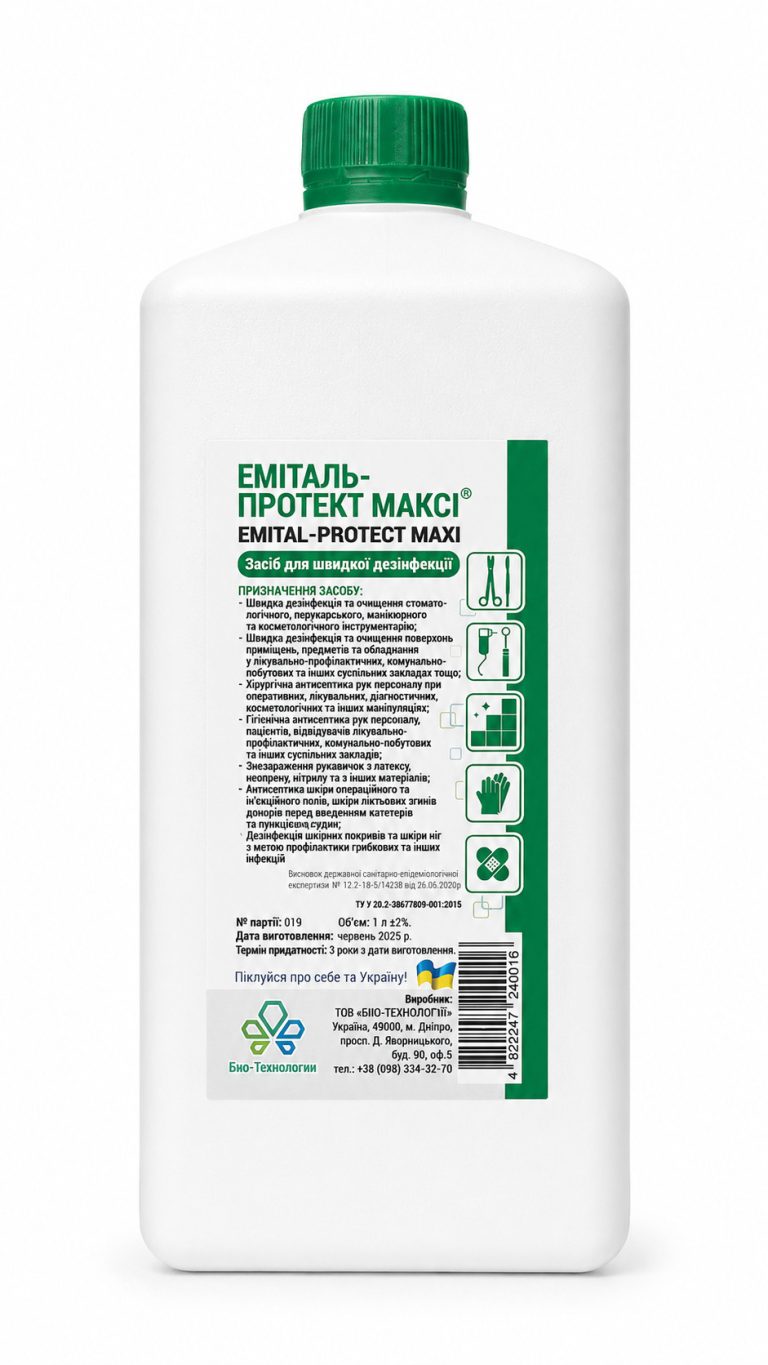
"Emital-Protect Maxi" is a ready-to-use alcohol-based disinfectant for hygienic and surgical hand antisepsis, skin treatment and glove decontamination. It is also suitable for rapid disinfection of small alcohol-resistant surfaces, equipment and instruments.
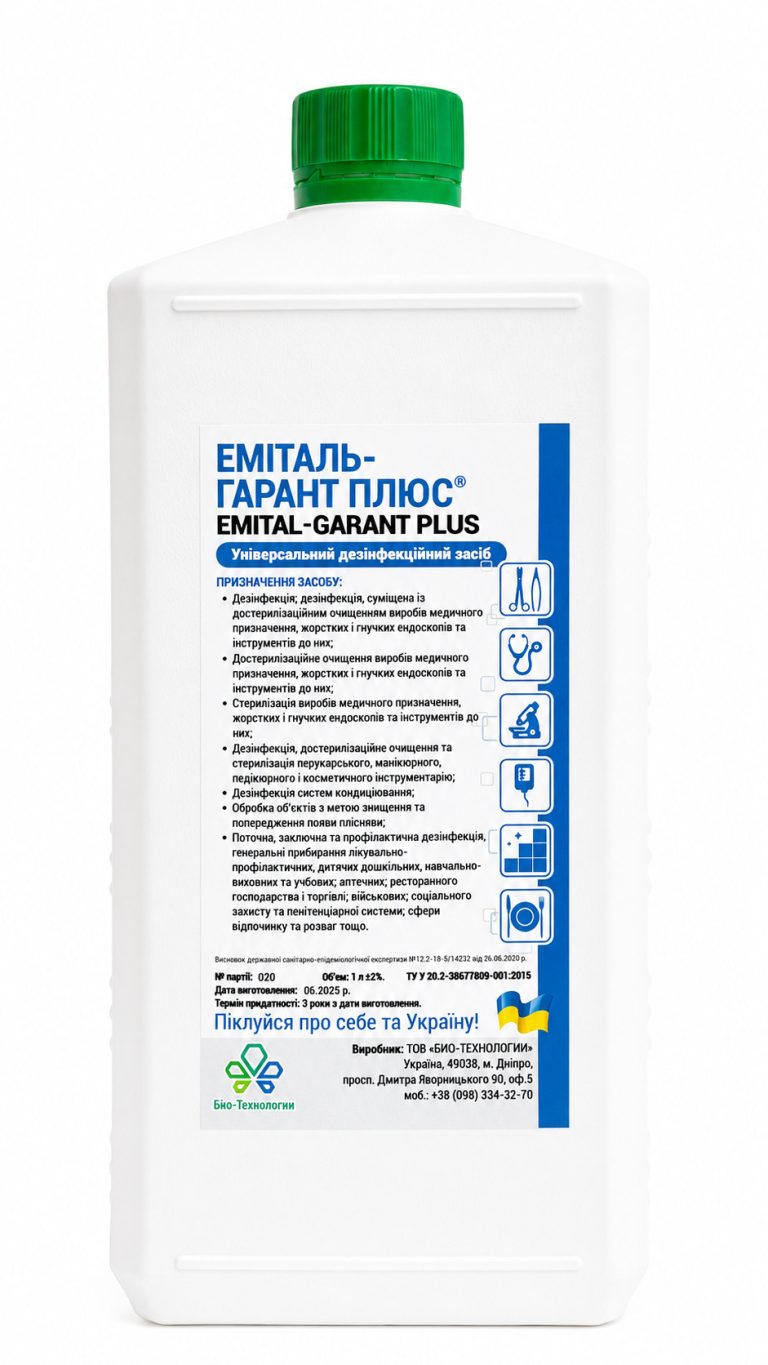
"Emital-Guarant Plus" is a concentrated disinfectant with detergent, deodorizing and anticorrosive properties. It is used for disinfection, pre-sterilization cleaning, sterilization of medical devices, and treatment of surfaces, equipment, tools and indoor air.
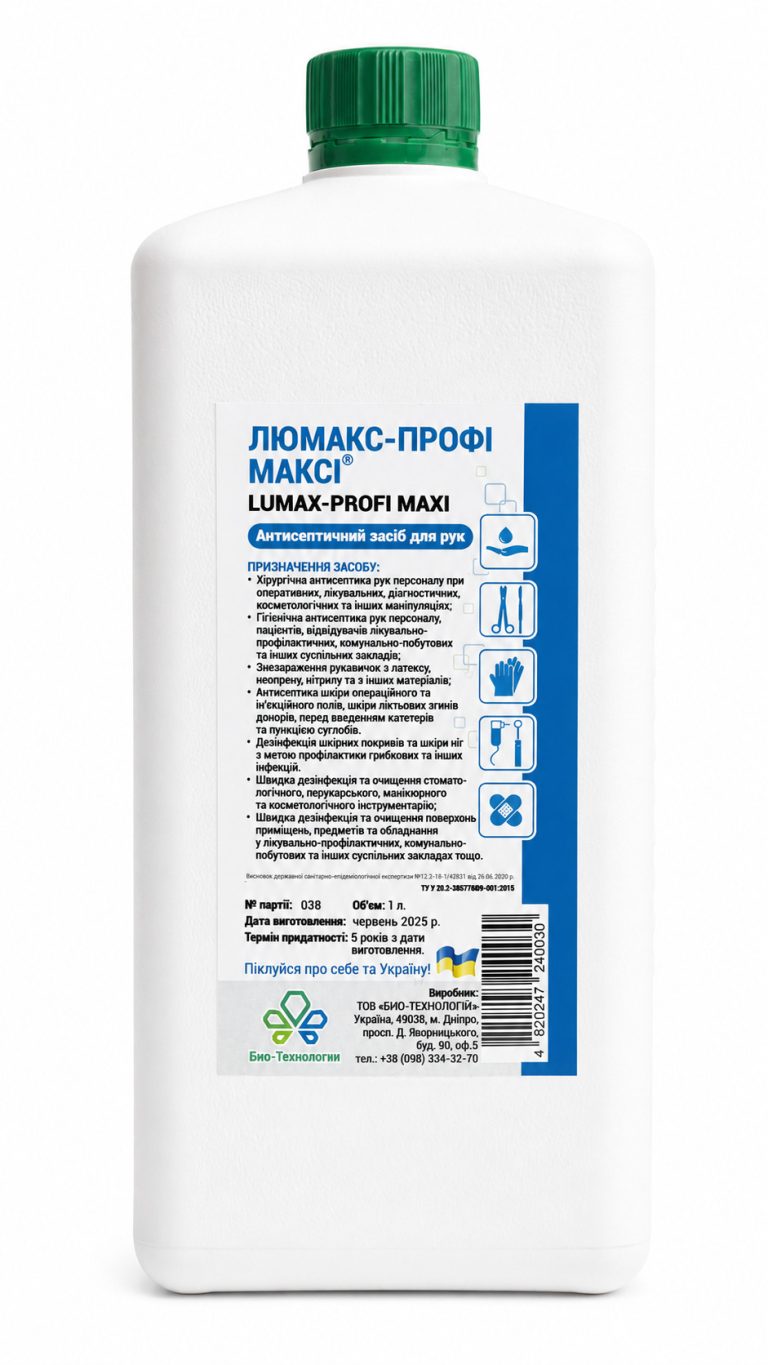
"Lumax-Profi Maxi" is a ready-to-use alcohol-based antiseptic and disinfectant for hands, skin and gloves. It is suitable for rapid treatment of small alcohol-resistant surfaces and medical, hairdressing and cosmetology instruments.
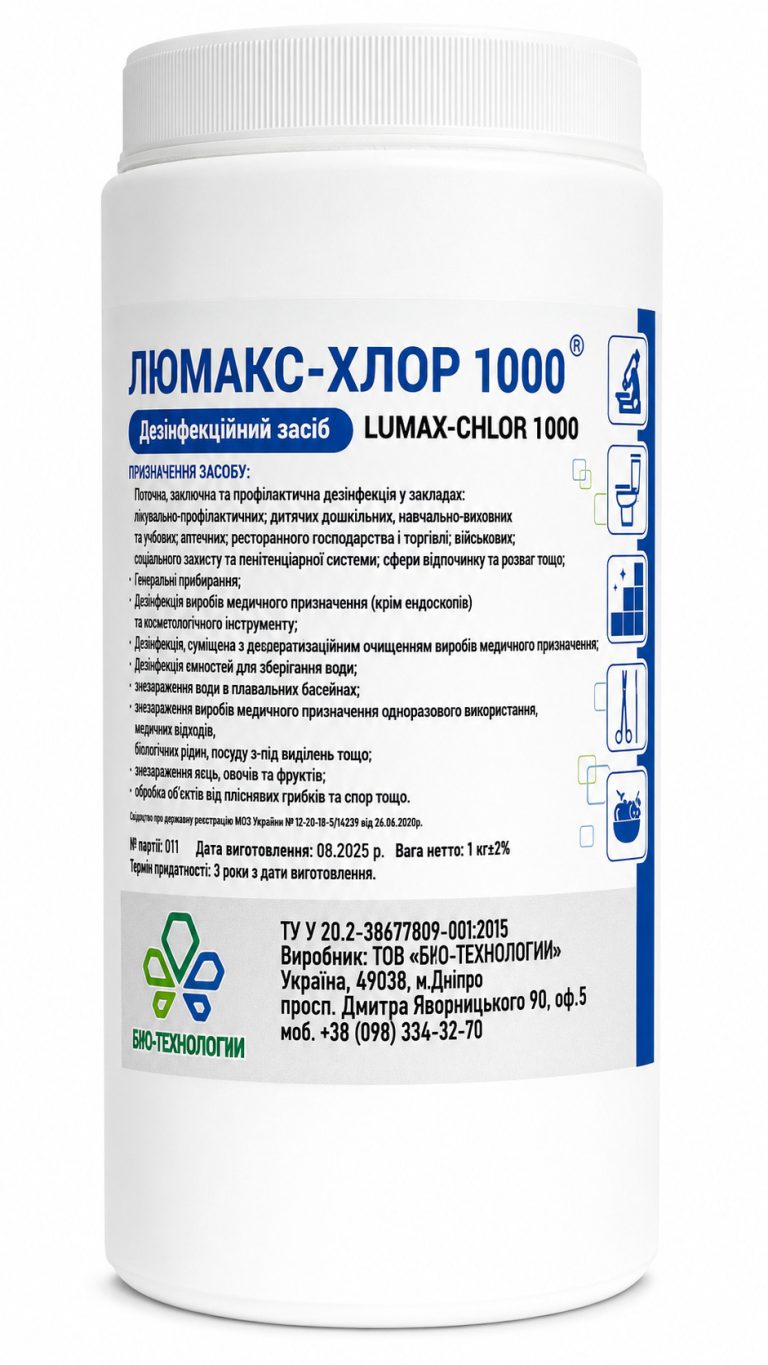
"Lumax-Chlor 1000" is a chlorine-based tablet disinfectant with detergent, wetting and bleaching properties. It is intended for disinfection of surfaces, medical devices, utensils, linen, water, tools and other objects.