


Product category: Disinfectants
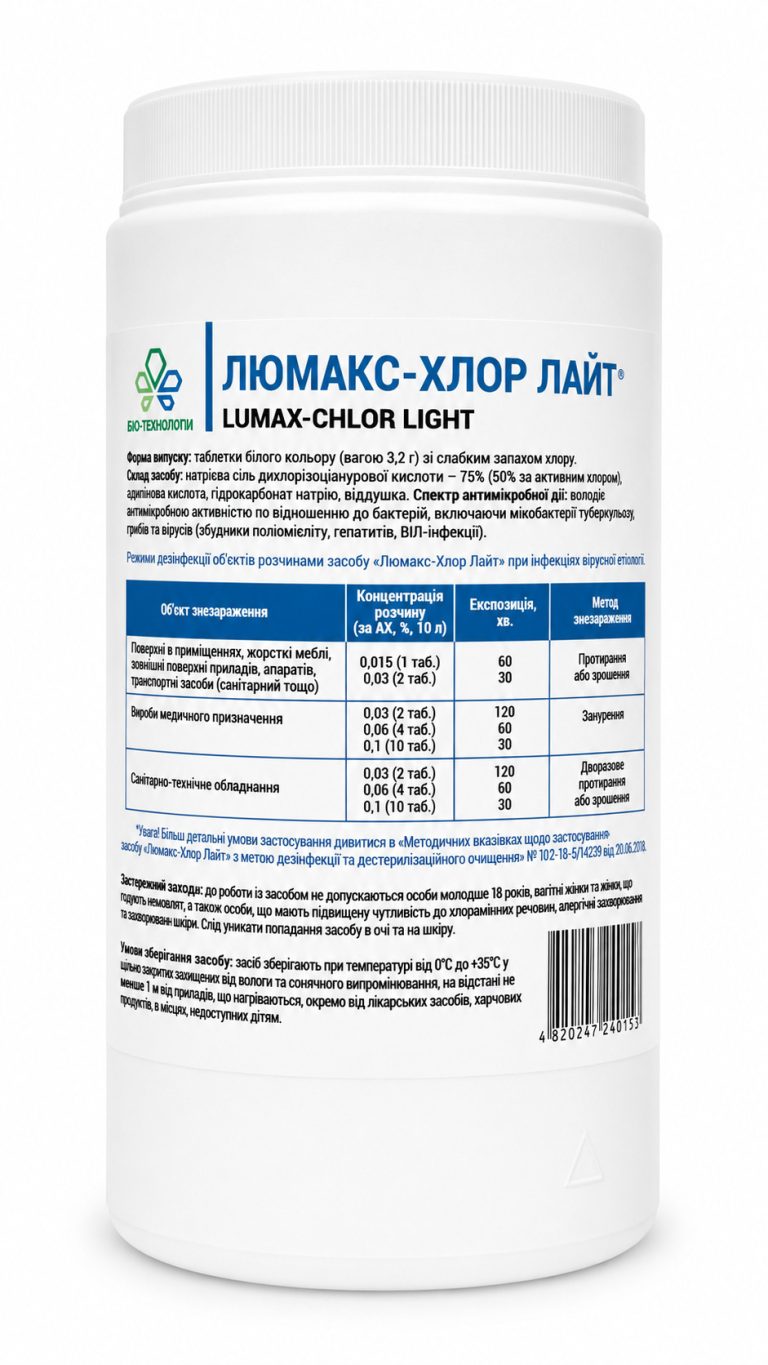
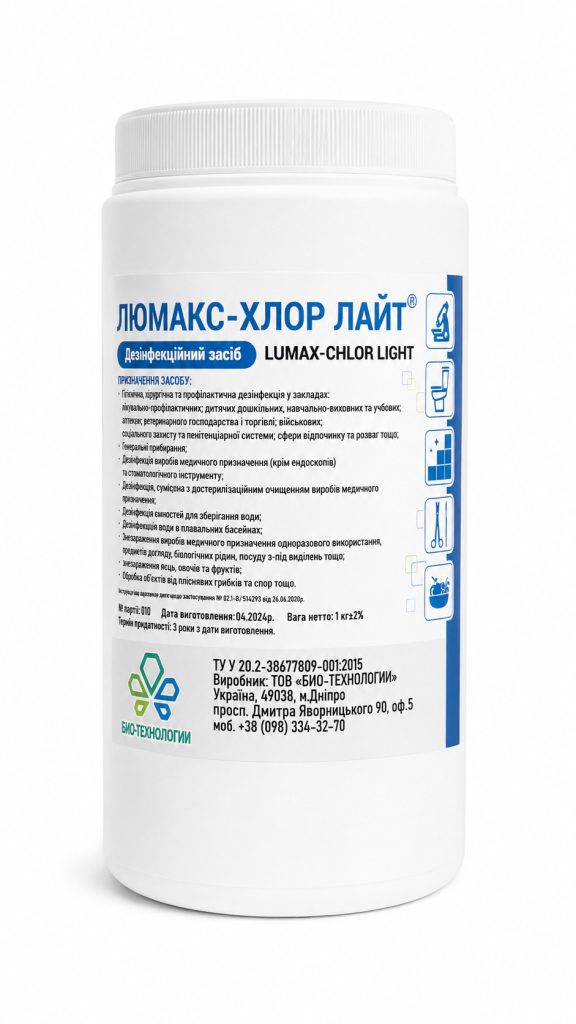
Full name of the product. Disinfectant “Lumax-Chlor Light”
Manufacturer: BIO-TECHNOLOGIES LLC, according to TU U 20.2-38677809-001:2015.
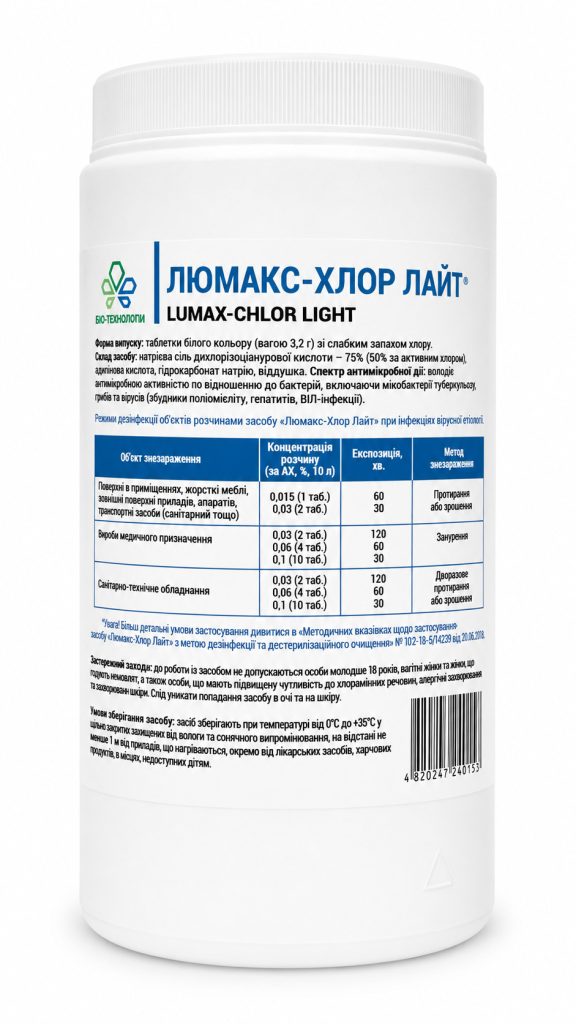
Composition of the product, content of active and auxiliary substances, wt.%: active substance: sodium salt of dichloroisocyanuric acid – 75.0% (50% available chlorine); auxiliary substances: adipic acid, sodium bicarbonate, fragrance.
Form of release and physicochemical properties of the product. The product is supplied as white tablets weighing 3.2±0.3 g, which dissolve readily in water. Dissolving one tablet in water releases 1.5±0.15 g of available chlorine.
Aqueous solutions are transparent and colorless, with a slight odor of chlorine and fragrance; they have detergent, wetting and bleaching properties, do not damage objects made of corrosion-resistant metals, glass, rubber, silicone, polymeric materials, wood, tile, porcelain and faience or surfaces of devices and equipment with galvanic, paint and polymer coatings; do not fix protein contamination, rinse off well and leave no deposits. The product does not burn, is explosion-safe, and is compatible with soaps, anionic surfactants, amphoteric and nonionic substances, and alkali-metal salts of inorganic and organic acids.
Intended use of the product. “Lumax-Chlor Light” is intended for:
– current and final disinfection in healthcare institutions, children’s institutions and foci of infectious diseases of bacterial etiology (including tuberculosis), viral etiology (including hepatitis, HIV infection, influenza, poliomyelitis, adenoviruses, Coxsackie viruses, ECHO viruses, rotaviruses, herpes, cytomegalovirus, etc.), fungal etiology (candidiasis and dermatophytosis), and in particularly dangerous infections (anthrax, plague, tularemia, cholera).
– preventive disinfection:
– – healthcare and treatment-and-prevention institutions of various profiles (surgical, therapeutic, obstetric departments, except neonatal departments, gynecological, physiotherapy departments, maternity hospitals, children’s and day hospitals, polyclinics, dental clinics and offices, hospitals, outpatient clinics, dispensaries, feldsher-midwife stations, organ transplantation centers, medical units and medical posts, emergency medical stations, pathological anatomy departments, sanatoriums, preventive treatment facilities, rehabilitation centers, social protection institutions, specialized medical centers, donor centers and blood transfusion departments, clinical, microbiological, biochemical, bacteriological, virological, serological and other laboratories, etc.);
– – pharmacy institutions (pharmaceutical warehouses, pharmacies, pharmacy stores, etc.);
– – preschool institutions, educational and training institutions of various accreditation levels;
– – enterprises of the perfumery and cosmetics, pharmaceutical, chemical, microbiological and food-processing industries;
– – restaurant and trade establishments (canteens, restaurants, shops, markets, etc.);
– – public utility and household service facilities (hotels, dormitories, campsites, apartments, hairdressing salons, beauty salons, cosmetology, manicure and pedicure rooms, piercing and tattoo salons, solariums, bathhouses, saunas, swimming pools, sports halls, cinemas, theaters, laundries, etc.);
– – transport infrastructure facilities (railway stations, stations, airports, etc.) and rolling stock of road, rail, water and air transport (passenger transport, sanitary transport, food transport, waste transport, ambulances, metro, etc.);
– – health-improvement institutions for adults and children (holiday homes, sanatoriums, preventive treatment facilities, rehabilitation centers, including functional diagnostics, physiotherapy and balneology rooms, homes for the elderly, etc.);
– – military units of the Ministry of Defence, Ministry of Internal Affairs and State Emergency Service;
– – leisure and entertainment facilities (cinemas, theaters, cultural and health-improvement complexes, etc.);
– – plants, factories, warehouses and storage facilities, including paper archives, library repositories, premises for storing grain, food, medicinal products, hygiene items, etc.;
– – social protection and penitentiary institutions;
– – warehouses and storage facilities (paper archives, library repositories, premises for storing grain, food, medicinal products, hygiene items, etc.);
– – public toilets, portable toilets and waste containers;
– – other epidemiologically significant facilities whose activities require disinfection work in accordance with applicable sanitary, hygienic and anti-epidemic standards and rules and regulatory documents;
– preventive disinfection and general cleaning in treatment-and-prevention institutions and at other facilities;
– disinfection combined with pre-sterilization cleaning of medical devices made of corrosion-resistant metals, glass, rubber, caoutchouc, polymeric materials, silicone and plastics (except flexible and rigid endoscopes and instruments for them);
– disinfection and simultaneous washing of room surfaces (floors, walls, doors, window sills, window frames), furniture, interior items, medical devices, apparatus and equipment with paint, galvanic and polymer coatings, patient care items, laboratory utensils, tableware, kitchenware and pharmacy utensils (including disposable utensils), food storage containers, linen, toys, sanitary equipment, cleaning tools, waste collection containers, rubber mats, bath sandals, leather footwear, slippers, sewage wells and drain pits, etc.;
– decontamination before disposal of used disposable medical devices, medical waste made of textile materials (textiles and disposable medical products), biological fluids and other contaminated secretions (blood, serum, mucus, sputum, saliva, vomit, feces, urine, rinsing water after gargling, wash water after washing a patient, food residues, etc.), and receptacles for secretions;
– disinfection combined with pre-sterilization cleaning of corrosion-resistant hairdressing, manicure, pedicure and cosmetic instruments and accessories at service enterprises;
– disinfection of medical instruments (except endoscopes and instruments for them), cosmetology instruments, etc.;
– pre-sterilization cleaning of medical instruments (except endoscopes and instruments for them), cosmetology instruments, etc.;
– decontamination of surfaces during disinfection measures at enterprises of the pharmaceutical, chemical, microbiological, biotechnological and perfumery and cosmetics industries, in laboratories, pharmacies, etc.;
– decontamination of room and equipment surfaces during disinfection measures at food industry enterprises (meat-processing, fish-processing, dairy, confectionery, bakery and beverage production enterprises, etc.), poultry farms and livestock complexes;
– water decontamination in decentralized water supply systems (well, artesian, spring-capture, river, lake, pond water, etc.);
– disinfection of water storage tanks and decontamination of water in swimming pools;
– decontamination of eggs, vegetables and fruit;
– treatment of objects against mold fungi and spores;
– disinfection of other epidemiologically significant facilities whose activities require disinfection measures in accordance with sanitary, hygienic and anti-epidemic standards and rules.
Spectrum of antimicrobial activity. “Lumax-Chlor Light” has antimicrobial activity against Gram-negative and Gram-positive bacteria (including Mycobacterium tuberculosis), viruses (including hepatitis B, HIV infection, poliomyelitis, adenoviruses, Coxsackie viruses, ECHO viruses, rotaviruses, influenza viruses, herpes, cytomegalovirus, etc.), fungi of the genus Candida and pathogenic dermatophytes
in particularly dangerous infections (anthrax, plague, tularemia, cholera).
Toxicity and safety of the product. According to acute toxicity parameters under GOST 12.1.007-76, “Lumax-Chlor Light” belongs to hazard class III, moderately hazardous substances, when administered into the stomach and to hazard class IV, low-hazard substances, when applied to the skin. It has no cumulative or sensitizing effect.
| There are no data |
Similar products
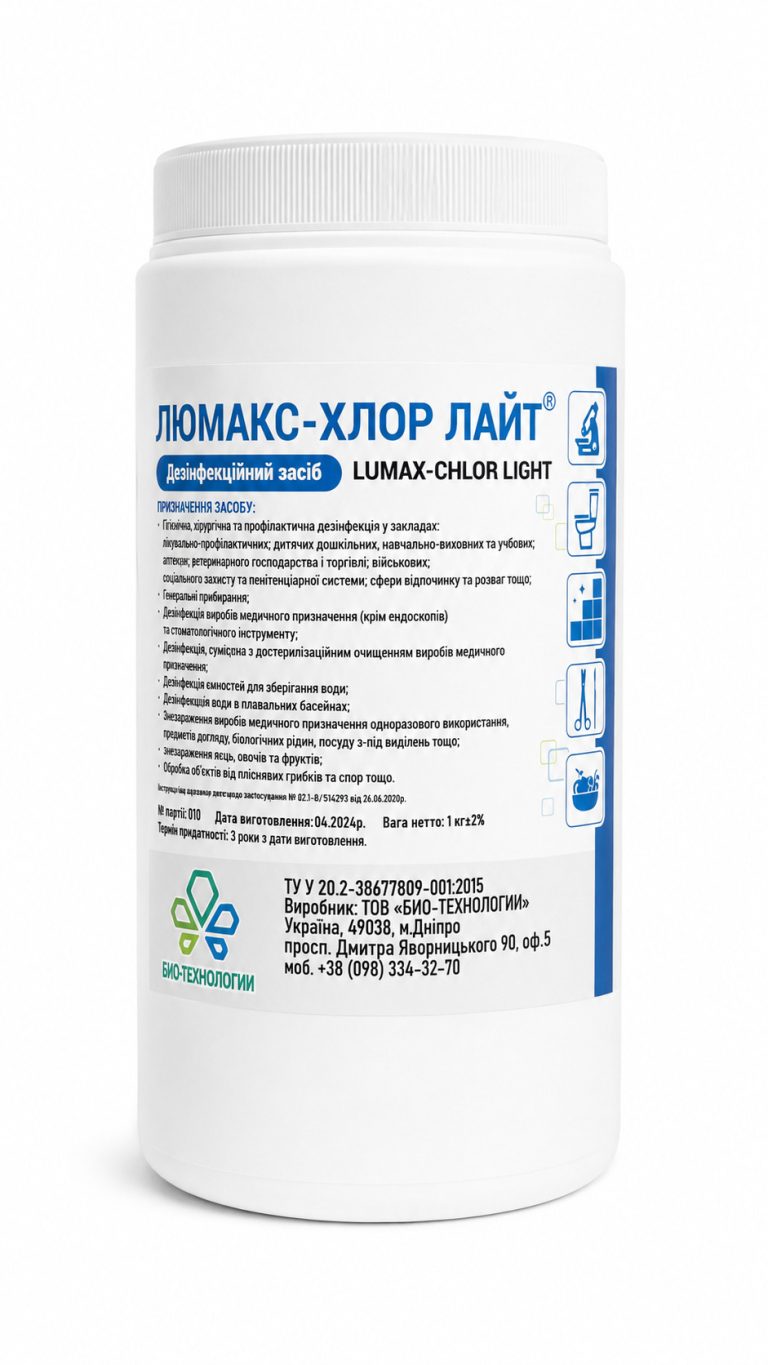
"Lumax-Chlor Light" is a chlorine-based tablet product for preparing working disinfectant solutions. It is used for treatment of surfaces, medical devices, utensils, linen, water, equipment, tools and other epidemiologically significant objects.
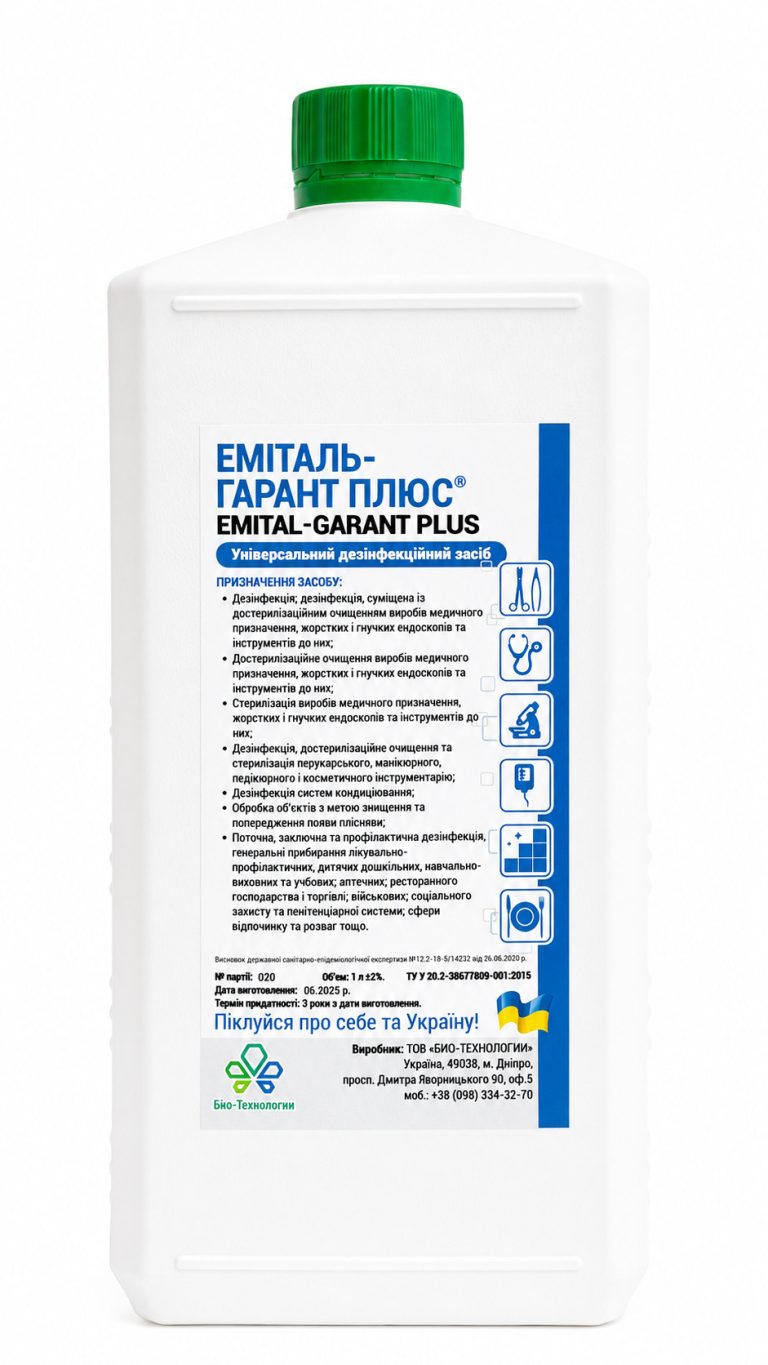
"Emital-Guarant Plus" is a concentrated disinfectant with detergent, deodorizing and anticorrosive properties. It is used for disinfection, pre-sterilization cleaning, sterilization of medical devices, and treatment of surfaces, equipment, tools and indoor air.
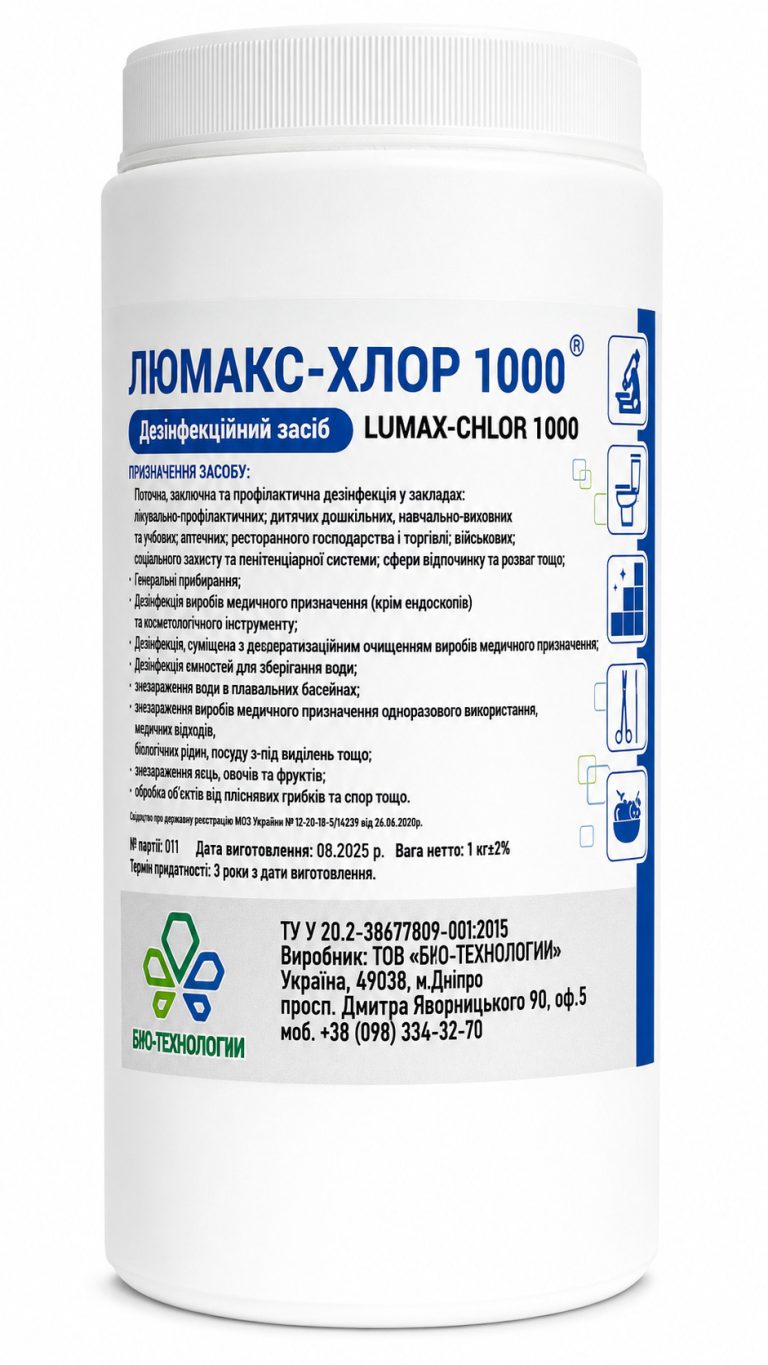
"Lumax-Chlor 1000" is a chlorine-based tablet disinfectant with detergent, wetting and bleaching properties. It is intended for disinfection of surfaces, medical devices, utensils, linen, water, tools and other objects.
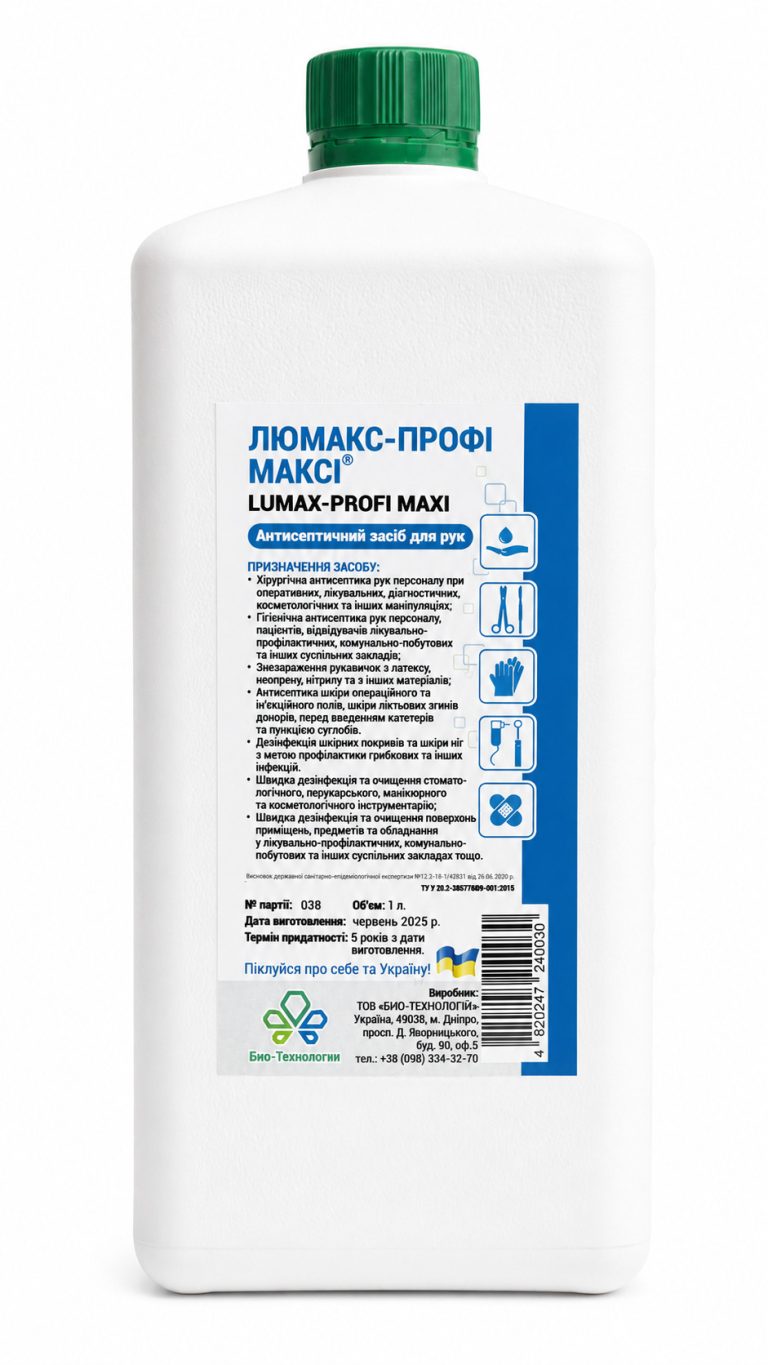
"Lumax-Profi Maxi" is a ready-to-use alcohol-based antiseptic and disinfectant for hands, skin and gloves. It is suitable for rapid treatment of small alcohol-resistant surfaces and medical, hairdressing and cosmetology instruments.
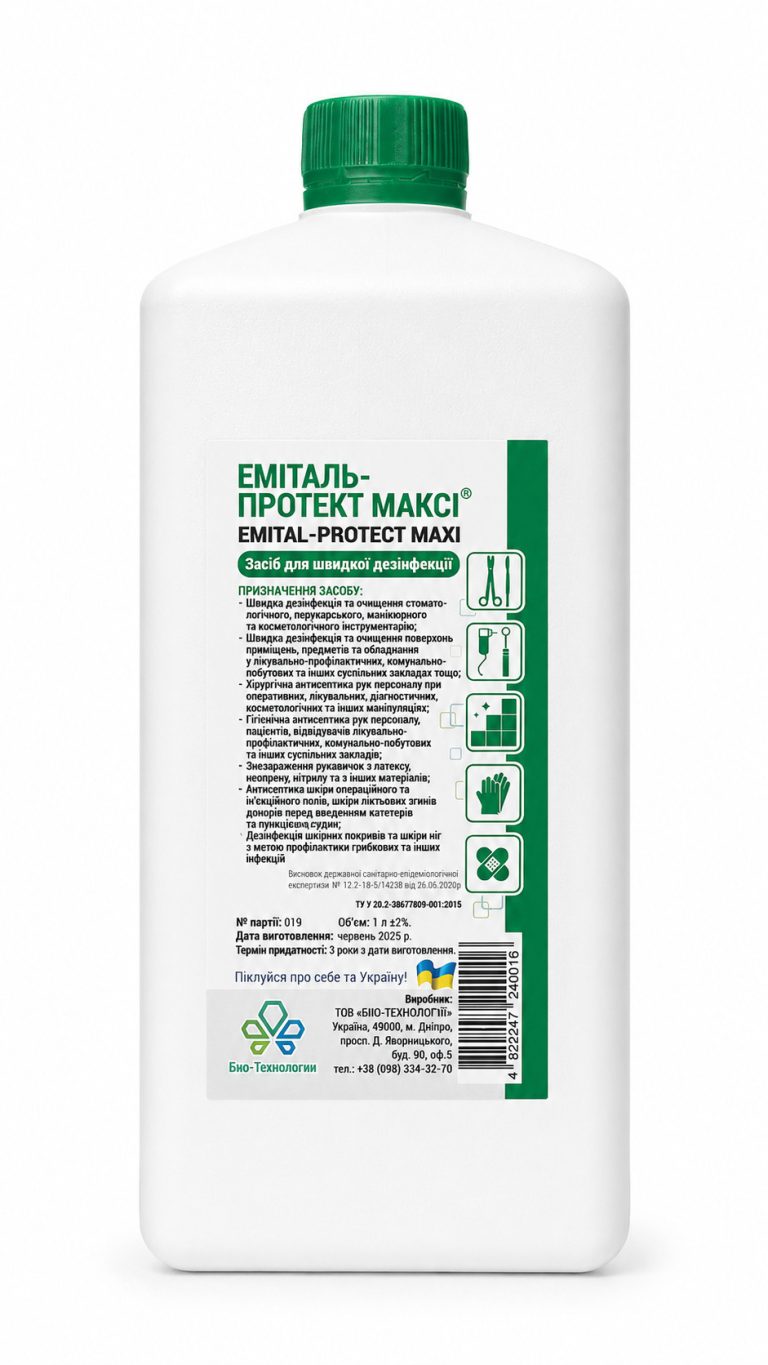
"Emital-Protect Maxi" is a ready-to-use alcohol-based disinfectant for hygienic and surgical hand antisepsis, skin treatment and glove decontamination. It is also suitable for rapid disinfection of small alcohol-resistant surfaces, equipment and instruments.
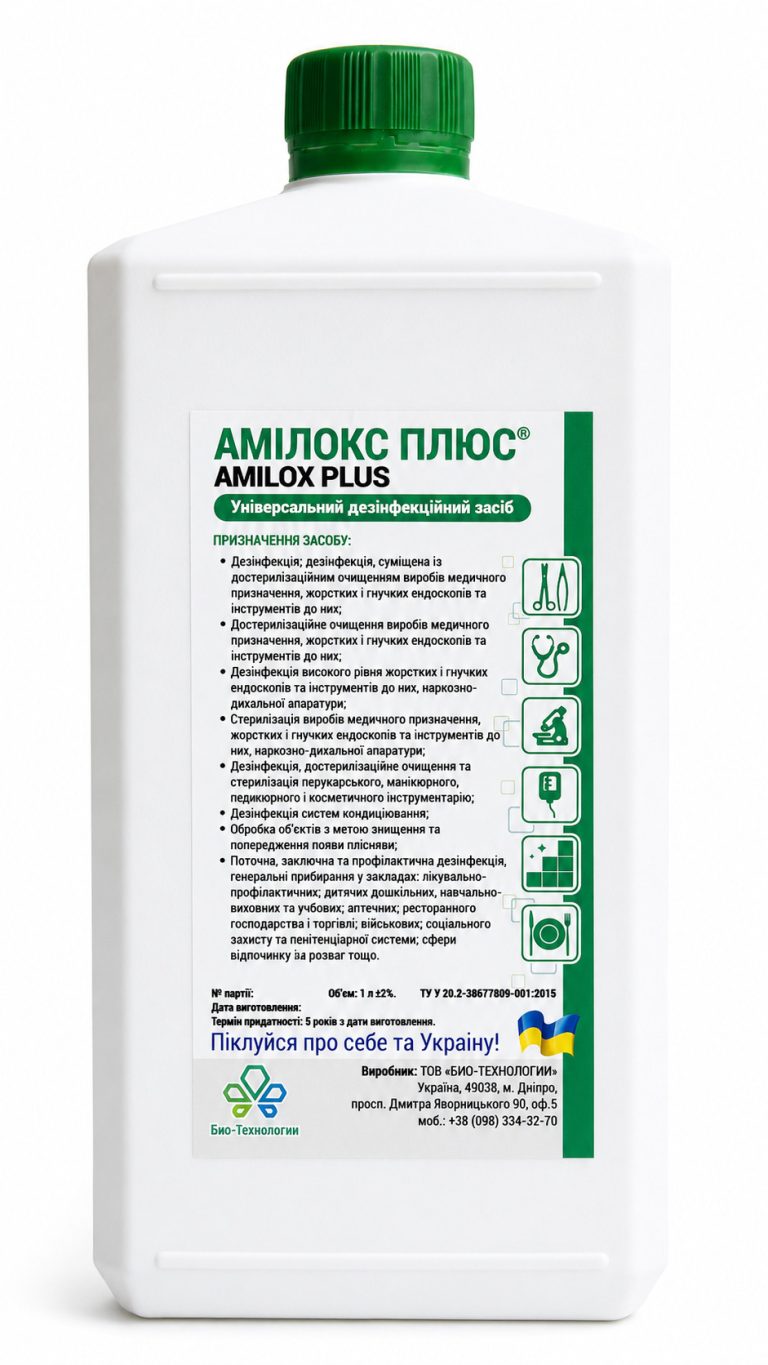
"Amilox Plus" is a concentrated disinfectant with detergent, wetting, deodorizing and emulsifying properties. It is intended for disinfection, pre-sterilization cleaning and sterilization of medical devices, surfaces, equipment, tools and other epidemiologically significant objects.
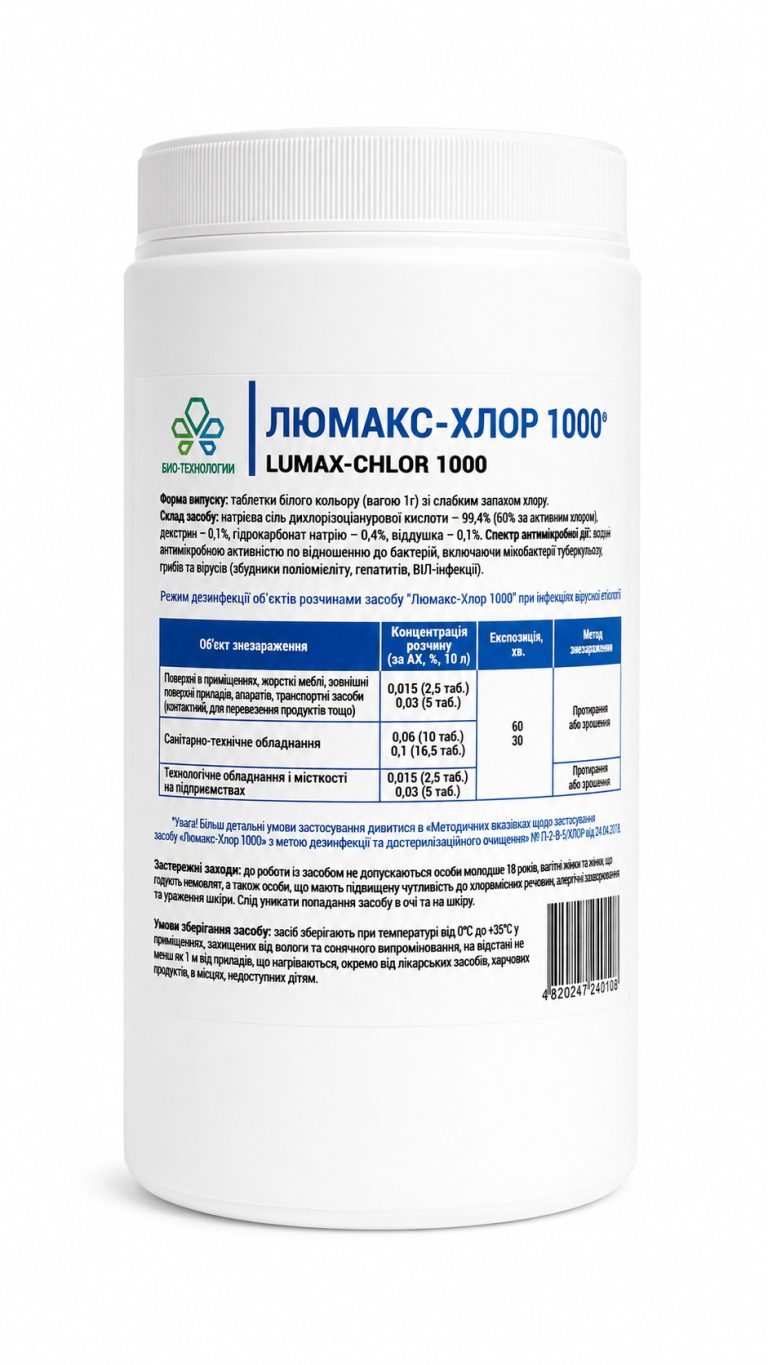
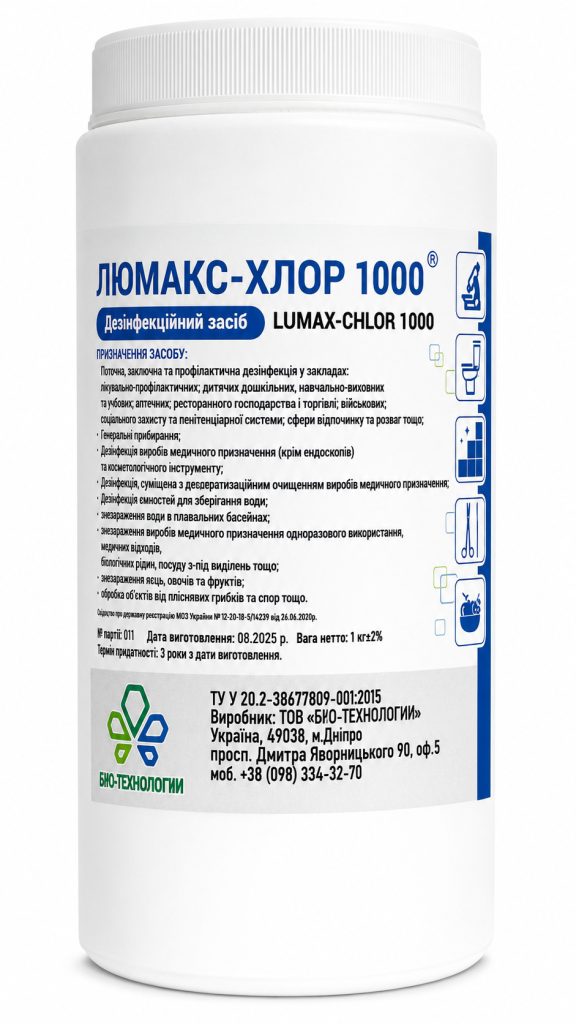
Full name of the product. Disinfectant “Lumax-Chlor 1000” (hereinafter referred to as the product)
Manufacturer: BIO-TECHNOLOGIES LLC (Ukraine), according to TU U 20.2-38677809-001:2015.
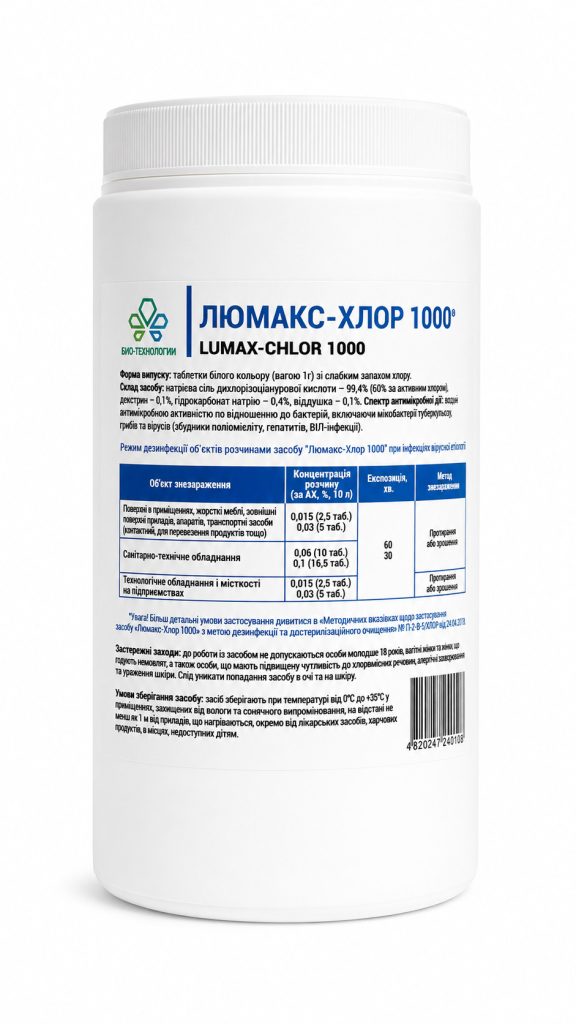
Composition of the product, content of active and auxiliary substances, wt.%: active substance: sodium salt of dichloroisocyanuric acid – 99.4% (60% available chlorine); auxiliary substances: dextrin – 0.1%; sodium bicarbonate – 0.4%; fragrance – 0.1%.
Form of release and physicochemical properties of the product. The product is supplied as white tablets weighing 1.0 g, which dissolve readily in water. Dissolving one tablet in water releases 0.6 g of available chlorine.
Aqueous solutions of the product are transparent and colorless, with a slight odor of chlorine and fragrance; they have detergent, wetting and bleaching properties, do not damage objects made of corrosion-resistant metals, glass, rubber, silicone, polymeric materials, wood, tile, porcelain and faience or surfaces of devices and equipment with galvanic, paint and polymer coatings; do not fix protein contamination, rinse off well and leave no deposits. The product does not burn, is explosion-safe, and is compatible with soaps, anionic surfactants, amphoteric and nonionic substances, and alkali-metal salts of inorganic and organic acids.
Intended use of the product. “Lumax-Chlor 1000” is intended for:
– current and final disinfection in healthcare institutions, children’s institutions and foci of infectious diseases of bacterial etiology (including tuberculosis), viral etiology (including hepatitis, HIV infection, influenza, poliomyelitis, adenoviruses, Coxsackie viruses, ECHO viruses, rotaviruses, herpes, cytomegalovirus, etc.), fungal etiology (candidiasis and dermatophytosis), and in particularly dangerous infections (anthrax, plague, tularemia, cholera).
– preventive disinfection:
– – healthcare and treatment-and-prevention institutions of various profiles (surgical, therapeutic, obstetric departments, except neonatal departments, gynecological, physiotherapy departments, maternity hospitals, children’s and day hospitals, polyclinics, dental clinics and offices, hospitals, outpatient clinics, dispensaries, feldsher-midwife stations, organ transplantation centers, medical units and medical posts, emergency medical stations, pathological anatomy departments, sanatoriums, preventive treatment facilities, rehabilitation centers, social protection institutions, specialized medical centers, donor centers and blood transfusion departments, clinical, microbiological, biochemical, bacteriological, virological, serological and other laboratories, etc.);
– – pharmacy institutions (pharmaceutical warehouses, pharmacies, pharmacy stores, etc.);
– – preschool institutions, educational and training institutions of various accreditation levels;
– – enterprises of the perfumery and cosmetics, pharmaceutical, chemical, microbiological and food-processing industries;
– – restaurant and trade establishments (canteens, restaurants, shops, markets, etc.);
– – public utility and household service facilities (hotels, dormitories, campsites, apartments, hairdressing salons, beauty salons, cosmetology, manicure and pedicure rooms, piercing and tattoo salons, solariums, bathhouses, saunas, swimming pools, sports halls, cinemas, theaters, laundries, etc.);
– – transport infrastructure facilities (railway stations, stations, airports, etc.) and rolling stock of road, rail, water and air transport (passenger transport, sanitary transport, food transport, waste transport, ambulances, metro, etc.);
– – health-improvement institutions for adults and children (holiday homes, sanatoriums, preventive treatment facilities, rehabilitation centers, including functional diagnostics, physiotherapy and balneology rooms, homes for the elderly, etc.);
– – military units of the Armed Forces of Ukraine, Ministry of Defence, Ministry of Internal Affairs and Ministry of Emergency Situations;
– – leisure and entertainment facilities (cinemas, theaters, cultural and health-improvement complexes, etc.);
– – plants, factories, warehouses and storage facilities, including paper archives, library repositories, premises for storing grain, food, medicinal products, hygiene items, etc.;
– – social protection and penitentiary institutions;
– – warehouses and storage facilities (paper archives, library repositories, premises for storing grain, food, medicinal products, hygiene items, etc.);
– – public toilets, portable toilets and waste containers;
– – other epidemiologically significant facilities whose activities require disinfection work in accordance with applicable sanitary, hygienic and anti-epidemic standards and rules and regulatory documents;
– preventive disinfection and general cleaning in treatment-and-prevention institutions and at other facilities;
– disinfection combined with pre-sterilization cleaning of medical devices made of corrosion-resistant metals, glass, rubber, caoutchouc, polymeric materials, silicone and plastics (except flexible and rigid endoscopes and instruments for them);
– disinfection and simultaneous washing of room surfaces (floors, walls, doors, window sills, window frames), furniture, interior items, medical devices, apparatus and equipment with paint, galvanic and polymer coatings, patient care items, laboratory utensils, tableware, kitchenware and pharmacy utensils (including disposable utensils), food storage containers, linen, toys, sanitary equipment, cleaning tools, waste collection containers, rubber mats, bath sandals, leather footwear, slippers, sewage wells and drain pits, etc.;
– decontamination before disposal of used disposable medical devices, medical waste made of textile materials (textiles and disposable medical products), biological fluids and other contaminated secretions (blood, serum, mucus, sputum, saliva, vomit, feces, urine, rinsing water after gargling, wash water after washing a patient, food residues, etc.), and receptacles for secretions;
– disinfection combined with pre-sterilization cleaning of corrosion-resistant hairdressing, manicure, pedicure and cosmetic instruments and accessories at service enterprises;
– disinfection of medical instruments (except endoscopes and instruments for them), cosmetology instruments, etc.;
– pre-sterilization cleaning of medical instruments (except endoscopes and instruments for them), cosmetology instruments, etc.;
– decontamination of surfaces during disinfection measures at enterprises of the pharmaceutical, chemical, microbiological, biotechnological and perfumery and cosmetics industries, in laboratories, pharmacies, etc.;
– decontamination of room and equipment surfaces during disinfection measures at food industry enterprises (meat-processing, fish-processing, dairy, confectionery, bakery and beverage production enterprises, etc.), poultry farms and livestock complexes;
– water decontamination in decentralized water supply systems (well, artesian, spring-capture, river, lake, pond water, etc.);
– disinfection of water storage tanks and decontamination of water in swimming pools;
– decontamination of eggs, vegetables and fruit;
– treatment of objects against mold fungi and spores;
– disinfection of other epidemiologically significant facilities whose activities require disinfection measures in accordance with sanitary, hygienic and anti-epidemic standards and rules.
Spectrum of antimicrobial activity. “Lumax-Chlor 1000” has antimicrobial activity against Gram-negative and Gram-positive bacteria (including Mycobacterium tuberculosis), viruses (including hepatitis B, HIV infection, poliomyelitis, adenoviruses, Coxsackie viruses, ECHO viruses, rotaviruses, influenza viruses, herpes, cytomegalovirus, etc.), fungi of the genus Candida and pathogenic dermatophytes, including in particularly dangerous infections (anthrax, plague, tularemia, cholera).
Toxicity and safety of the product. According to acute toxicity parameters under GOST 12.1.007-76, “Lumax-Chlor 1000” belongs to hazard class III, moderately hazardous substances, when administered into the stomach and to hazard class IV, low-hazard substances, when applied to the skin. It has no cumulative or sensitizing effect.
| There are no data |
Similar products
"Emital-Protect Maxi" is a ready-to-use alcohol-based disinfectant for hygienic and surgical hand antisepsis, skin treatment and glove decontamination. It is also suitable for rapid disinfection of small alcohol-resistant surfaces, equipment and instruments.
"Lumax-Profi Maxi" is a ready-to-use alcohol-based antiseptic and disinfectant for hands, skin and gloves. It is suitable for rapid treatment of small alcohol-resistant surfaces and medical, hairdressing and cosmetology instruments.
"Lumax-Chlor Light" is a chlorine-based tablet product for preparing working disinfectant solutions. It is used for treatment of surfaces, medical devices, utensils, linen, water, equipment, tools and other epidemiologically significant objects.
"Emital-Guarant Plus" is a concentrated disinfectant with detergent, deodorizing and anticorrosive properties. It is used for disinfection, pre-sterilization cleaning, sterilization of medical devices, and treatment of surfaces, equipment, tools and indoor air.
"Amilox Plus" is a concentrated disinfectant with detergent, wetting, deodorizing and emulsifying properties. It is intended for disinfection, pre-sterilization cleaning and sterilization of medical devices, surfaces, equipment, tools and other epidemiologically significant objects.
"Lumax-Chlor 1000" is a chlorine-based tablet disinfectant with detergent, wetting and bleaching properties. It is intended for disinfection of surfaces, medical devices, utensils, linen, water, tools and other objects.
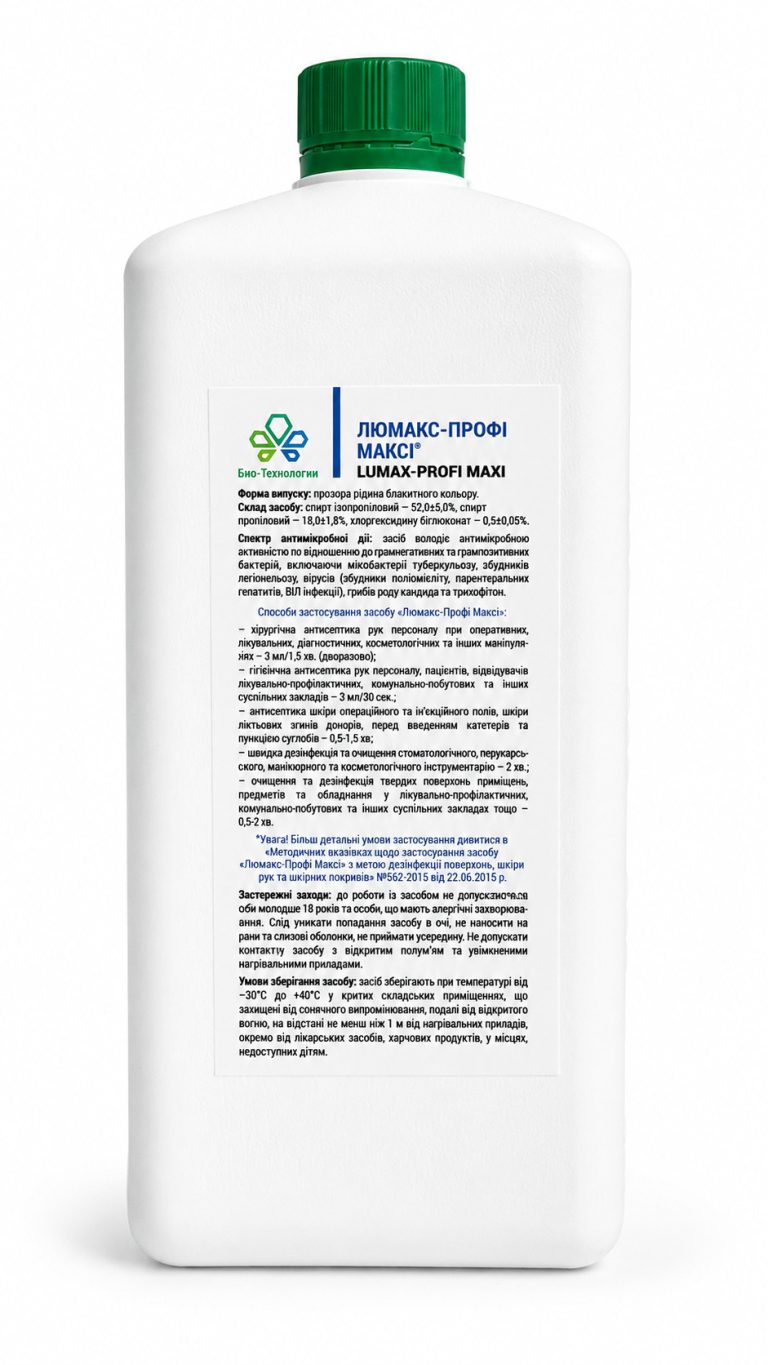
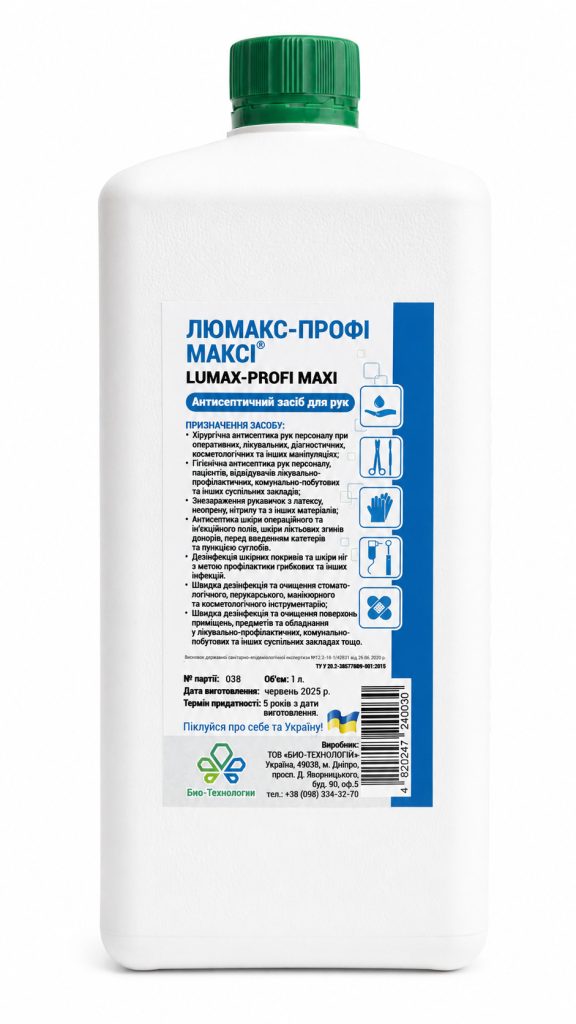
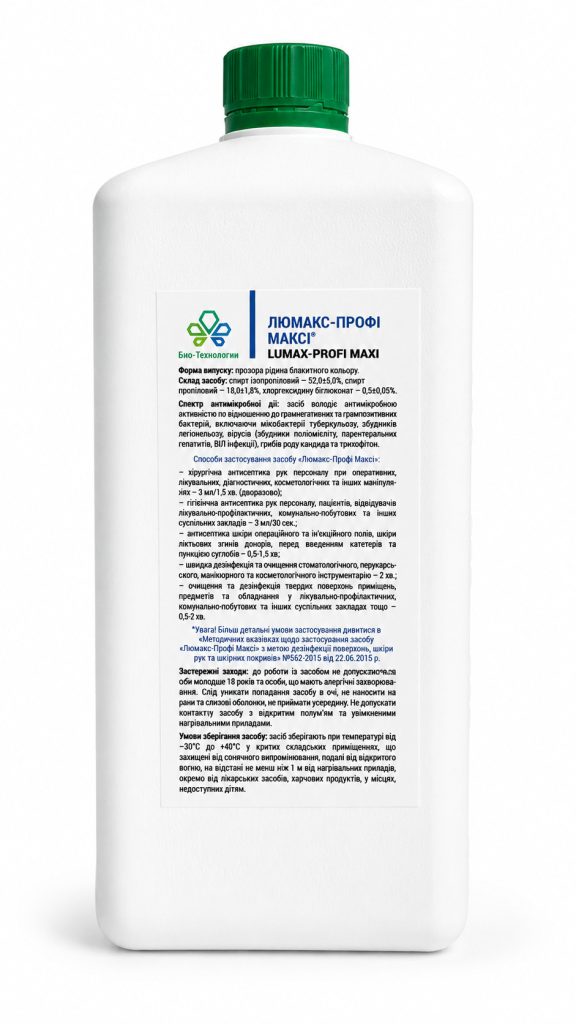
Full name of the product. Disinfectant “Lumax-Profi Maxi” (hereinafter referred to as the product)
Manufacturer. BIO-TECHNOLOGIES LLC according to TU U 20.2-38677809-001:2015.
Composition of the product, content of active and auxiliary substances, wt.%. Isopropyl alcohol – 52.0±5.0%; propyl alcohol – 18.0±1.8%; chlorhexidine bigluconate – 0.5±0.05% (active substances), functional components, including skin-care components (auxiliary substances).
Form of release and physicochemical properties of the product. Transparent blue liquid. The product retains its properties after freezing and subsequent thawing. pH of hydrogen ions – 6.8±1.0. Flammable liquid.
Intended use of the product. The product is intended for:
– surgical hand antisepsis of personnel participating in surgical, therapeutic, diagnostic, cosmetological and other procedures involving disruption of the integrity of the skin and mucous membranes (including in pediatric, obstetric and gynecological, and neonatal departments);
– hygienic hand antisepsis of personnel, patients and visitors in treatment-and-prevention institutions (including pediatric, obstetric and gynecological, and neonatal departments), health-improvement, educational, preschool, pharmacy and food institutions; blood transfusion centers; laboratories of various profiles; social protection institutions; enterprises of the perfumery and cosmetics, pharmaceutical, microbiological and food industries; penitentiary institutions; public utility facilities (hairdressing salons, beauty salons, bathhouses, saunas, hotels, etc.); motor transport; public catering and trade enterprises (including persons handling money); in emergency areas, etc.;
– hygienic hand and injection-site antisepsis by the general public in domestic conditions (including children over 3 years of age), and treatment of minor skin injuries;
– decontamination of gloves made of latex, neoprene, nitrile and other materials resistant to chemicals;
– antisepsis of the skin of surgical and injection fields, including the skin of donors’ elbow bends, and the skin before catheter insertion and joint puncture;
– hygienic hand antisepsis of personnel at public utility and household service facilities (hairdressing salons, beauty salons, SPA centers, manicure, pedicure and massage rooms, cosmetology clinics and salons, solariums, bathhouses, saunas, etc.) before and after working with a client, as well as treatment of the client’s skin during manicure, pedicure, tattooing, piercing and other procedures involving skin damage;
– disinfection (sanitary treatment) of the skin and treatment of the skin of the feet to prevent fungal and other infections;
– hygienic hand antisepsis of personnel and passengers of rolling stock and support facilities of all types of transport (including sanitary transport, ambulances, public, rail, sea, river, road and air transport), railway stations, airports, etc.;
– cleaning and disinfection of small-area, alcohol-resistant and hard-to-reach solid surfaces of premises, items and equipment, whether contaminated or not contaminated with biological fluids and secretions, in treatment-and-prevention institutions (including pediatric, obstetric and gynecological, and neonatal departments), health-improvement, pharmacy and food institutions; blood transfusion centers; laboratories of various profiles; social protection institutions; enterprises of the perfumery and cosmetics, pharmaceutical, microbiological and food industries; penitentiary institutions; public utility facilities (hairdressing salons, beauty salons, bathhouses, saunas, hotels, etc.); motor vehicles; hotel and trade enterprises; in foci of infectious diseases (except particularly dangerous infections) and in emergency areas, etc.;
– rapid disinfection and cleaning of dental handpieces for drills and other alcohol-resistant devices;
– rapid disinfection of hairdressing, manicure and cosmetology instruments, scissors, instruments and plastic items (brushes, combs), instruments for tattooing, permanent makeup, piercing, etc.;
– cleaning and disinfection of alcohol-resistant surfaces of solariums, pressure chambers, SPA capsules, etc.;
– cleaning and disinfection of sports equipment and the inner surface of footwear in sports and health-improvement institutions to prevent fungal diseases;
– cleaning and disinfection by the general public in domestic conditions of small-area, alcohol-resistant and hard-to-reach solid surfaces and the inner surface of footwear to prevent fungal diseases.
Spectrum of antimicrobial activity. The product has a broad spectrum of antimicrobial activity against transient and resident microflora. It is active against bacteria, including Mycobacterium terrae (tuberculocidal activity), MRSA, Pseudomonas aeruginosa, Escherichia coli, Acinetobacter baumannii and Staphylococcus aureus; viruses, including enveloped viruses (pathogens of enteroviral, noroviral, rotaviral, adenoviral, coronavirus, rhinovirus, hantavirus, herpesvirus and cytomegalovirus infections, poliomyelitis, enteral and parenteral hepatitis, HIV infection, SARS, influenza, avian influenza H5N1, etc.); and fungi of the genera Candida and Aspergillus niger.
“Lumax-Profi Maxi” has wound-healing and anti-inflammatory effects and is effective in the presence of biological fluids and secretions. The product has an antiperspirant effect and reduces the amount of moisture under gloves. The product promotes degreasing and cleansing of the skin and effective adhesion of surgical film.
Toxicity and safety of the product. According to acute toxicity parameters under GOST 12.1.007-76, when administered into the stomach and applied to the skin the product belongs to hazard class 4 (low-hazard substances); when inhaled as an aerosol or vapor at the specified application rate, to hazard class 4 (low-hazard substances). Under the recommended conditions of use, local irritant, skin-resorptive and sensitizing properties are not expressed. Contact with the mucous membrane of the eyes causes moderate irritation.
| There are no data |
Similar products
"Emital-Protect Maxi" is a ready-to-use alcohol-based disinfectant for hygienic and surgical hand antisepsis, skin treatment and glove decontamination. It is also suitable for rapid disinfection of small alcohol-resistant surfaces, equipment and instruments.
"Lumax-Chlor 1000" is a chlorine-based tablet disinfectant with detergent, wetting and bleaching properties. It is intended for disinfection of surfaces, medical devices, utensils, linen, water, tools and other objects.
"Amilox Plus" is a concentrated disinfectant with detergent, wetting, deodorizing and emulsifying properties. It is intended for disinfection, pre-sterilization cleaning and sterilization of medical devices, surfaces, equipment, tools and other epidemiologically significant objects.
"Emital-Guarant Plus" is a concentrated disinfectant with detergent, deodorizing and anticorrosive properties. It is used for disinfection, pre-sterilization cleaning, sterilization of medical devices, and treatment of surfaces, equipment, tools and indoor air.
"Lumax-Chlor Light" is a chlorine-based tablet product for preparing working disinfectant solutions. It is used for treatment of surfaces, medical devices, utensils, linen, water, equipment, tools and other epidemiologically significant objects.
"Lumax-Profi Maxi" is a ready-to-use alcohol-based antiseptic and disinfectant for hands, skin and gloves. It is suitable for rapid treatment of small alcohol-resistant surfaces and medical, hairdressing and cosmetology instruments.
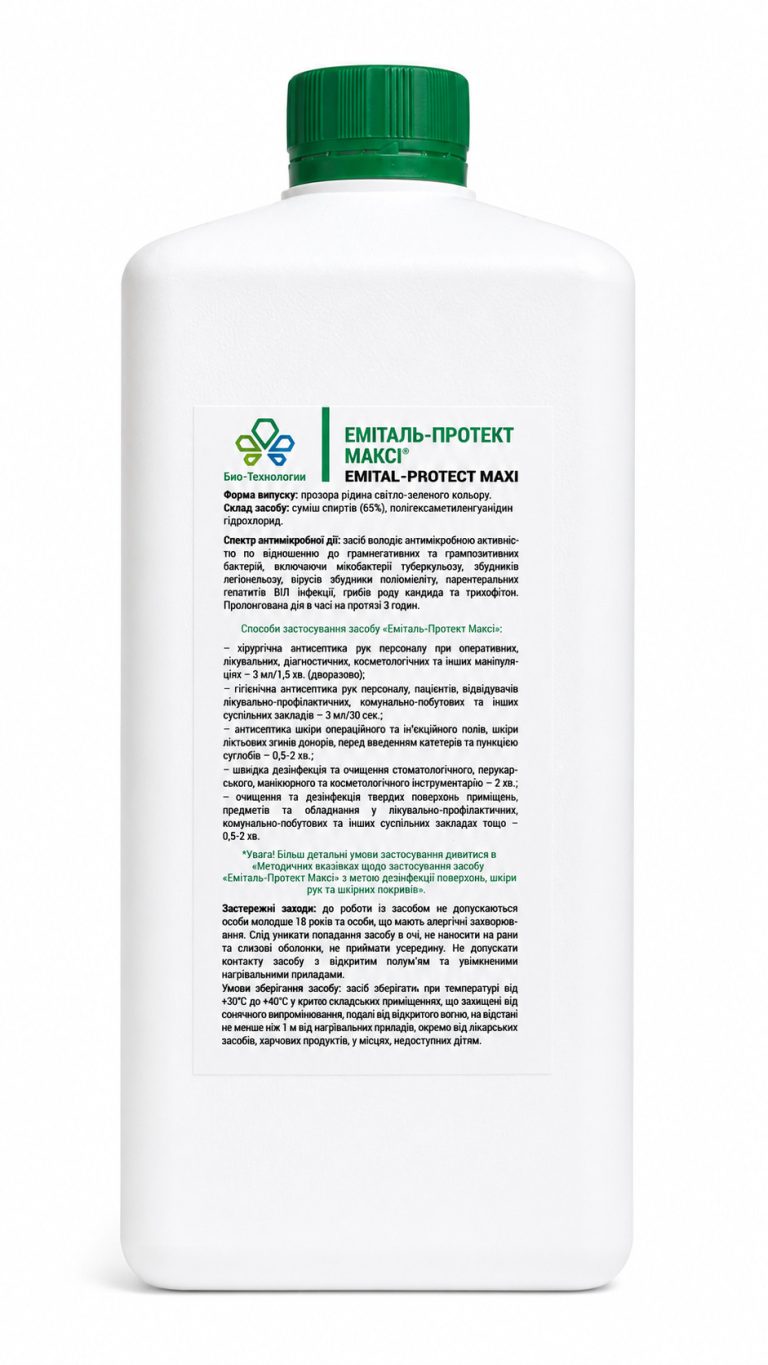
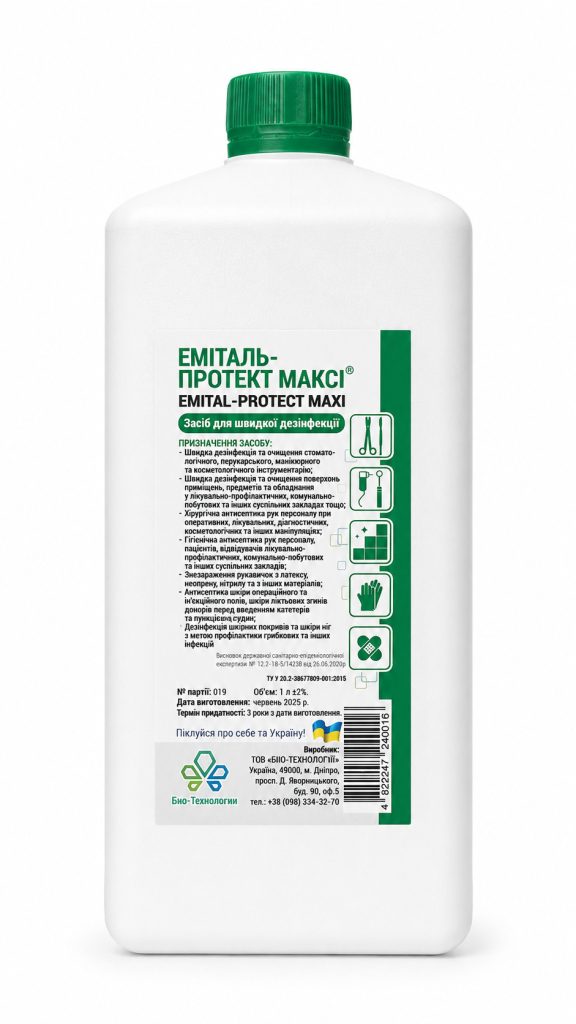
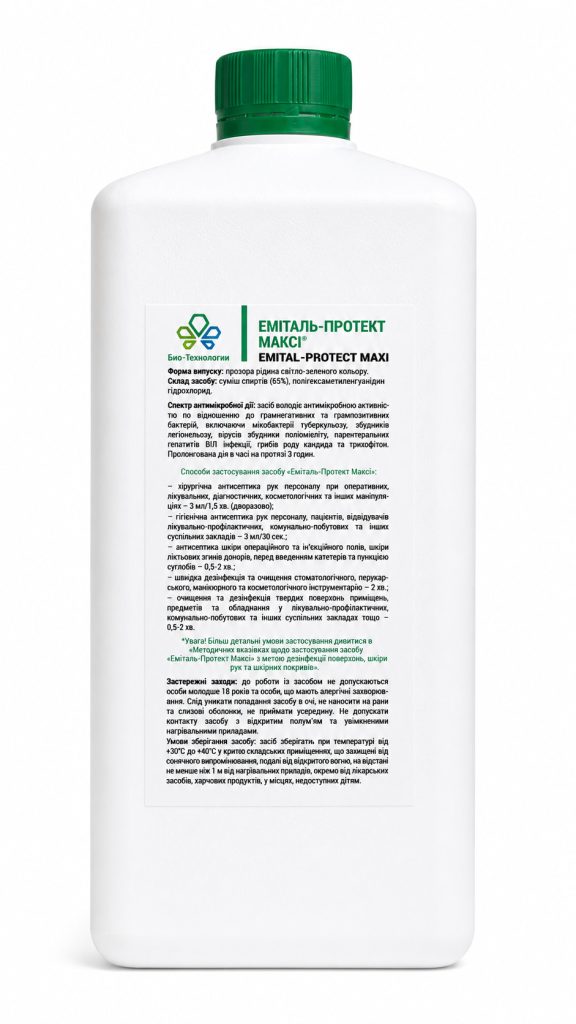
Full name of the product. Disinfectant “Emital-Protect Maxi” (hereinafter referred to as the product)
Manufacturer. BIO-TECHNOLOGIES LLC, according to TU U 20.2-38677809-001:2015.
Composition of the product, content of active and auxiliary substances, wt.%. Isopropyl alcohol – 50.0±5.0%; propyl alcohol – 15.0±1.5%; copolymer of water-soluble polyhexamethylene guanidine salts – 0.35±0.04% (active substances).
Form of release and physicochemical properties of the product. The disinfectant “Emital-Protect Maxi” is supplied as a transparent light-green liquid.
Intended use of the product. The product is intended for:
– surgical hand antisepsis of personnel participating in surgical, therapeutic, diagnostic, cosmetological and other procedures involving disruption of the integrity of the skin and mucous membranes (including in pediatric, obstetric and gynecological, and neonatal departments);
– hygienic hand antisepsis of personnel, patients and visitors in treatment-and-prevention institutions (including pediatric, obstetric and gynecological, and neonatal departments), health-improvement, educational, preschool, pharmacy and food institutions; blood transfusion centers; laboratories of various profiles; social protection institutions; enterprises of the perfumery and cosmetics, pharmaceutical, microbiological and food industries; penitentiary institutions; public utility facilities (hairdressing salons, beauty salons, bathhouses, saunas, hotels, etc.); motor transport; public catering and trade enterprises (including persons handling money); in emergency areas, etc.;
– hygienic hand and injection-site antisepsis by the general public in domestic conditions (including children over 3 years of age), and treatment of minor skin injuries;
– decontamination of gloves made of latex, neoprene, nitrile and other materials resistant to chemicals;
– antisepsis of the skin of surgical and injection fields, including the skin of donors’ elbow bends, and the skin before catheter insertion and joint puncture;
– hygienic hand antisepsis of personnel at public utility and household service facilities (hairdressing salons, beauty salons, SPA centers, manicure, pedicure and massage rooms, cosmetology clinics and salons, solariums, bathhouses, saunas, etc.) before and after working with a client, as well as treatment of the client’s skin during manicure, pedicure, tattooing, piercing and other procedures involving skin damage;
– disinfection (sanitary treatment) of the skin and treatment of the skin of the feet to prevent fungal and other infections;
– hygienic hand antisepsis of personnel and passengers of rolling stock and support facilities of all types of transport (including sanitary transport, ambulances, public, rail, sea, river, road and air transport), railway stations, airports, etc.;
– cleaning and disinfection of small-area, alcohol-resistant and hard-to-reach solid surfaces of premises, items and equipment, whether contaminated or not contaminated with biological fluids and secretions, in treatment-and-prevention institutions (including pediatric, obstetric and gynecological, and neonatal departments), health-improvement, pharmacy and food institutions; blood transfusion centers; laboratories of various profiles; social protection institutions; enterprises of the perfumery and cosmetics, pharmaceutical, microbiological and food industries; penitentiary institutions; public utility facilities (hairdressing salons, beauty salons, bathhouses, saunas, hotels, etc.); motor vehicles; restaurant and trade enterprises; in foci of infectious diseases (except particularly dangerous infections) and in emergency areas, etc.;
– rapid disinfection and cleaning of dental handpieces for drills and other alcohol-resistant devices;
– rapid disinfection of hairdressing, manicure and cosmetology instruments, scissors, instruments and plastic items (brushes, combs), instruments for tattooing, permanent makeup, piercing, etc.;
– cleaning and disinfection of alcohol-resistant surfaces of solariums, pressure chambers, SPA capsules, etc.;
– cleaning and disinfection of sports equipment and the inner surface of footwear in sports and health-improvement institutions to prevent fungal diseases;
– cleaning and disinfection by the general public in domestic conditions of small-area, alcohol-resistant and hard-to-reach solid surfaces and the inner surface of footwear to prevent fungal diseases.
Spectrum of antimicrobial activity. The product has a broad spectrum of antimicrobial activity against transient and resident microflora. It is active against bacteria, including Mycobacterium terrae (tuberculocidal activity), MRSA, Pseudomonas aeruginosa, Escherichia coli, Acinetobacter baumannii and Staphylococcus aureus; viruses, including enveloped viruses (pathogens of enteroviral, noroviral, rotaviral, adenoviral, coronavirus, rhinovirus, hantavirus, herpesvirus and cytomegalovirus infections, poliomyelitis, enteral and parenteral hepatitis, HIV infection, SARS, influenza, avian influenza H5N1, etc.); and fungi of the genera Candida and Aspergillus niger. When used for hand disinfection, the product has a prolonged antimicrobial effect for at least three hours, including under gloves.
Toxicity and safety of the product. According to acute toxicity parameters under GOST 12.1.007-76, when administered into the stomach and applied to the skin the product belongs to hazard class 4 (low-hazard substances); when inhaled as an aerosol or vapor at the specified application rate, to hazard class 4 (low-hazard substances). Under the recommended conditions of use, local irritant, skin-resorptive and sensitizing properties are not expressed. Contact with the mucous membrane of the eyes causes moderate irritation.
| There are no data |
Similar products
"Emital-Guarant Plus" is a concentrated disinfectant with detergent, deodorizing and anticorrosive properties. It is used for disinfection, pre-sterilization cleaning, sterilization of medical devices, and treatment of surfaces, equipment, tools and indoor air.
"Emital-Protect Maxi" is a ready-to-use alcohol-based disinfectant for hygienic and surgical hand antisepsis, skin treatment and glove decontamination. It is also suitable for rapid disinfection of small alcohol-resistant surfaces, equipment and instruments.
"Lumax-Chlor 1000" is a chlorine-based tablet disinfectant with detergent, wetting and bleaching properties. It is intended for disinfection of surfaces, medical devices, utensils, linen, water, tools and other objects.
"Lumax-Chlor Light" is a chlorine-based tablet product for preparing working disinfectant solutions. It is used for treatment of surfaces, medical devices, utensils, linen, water, equipment, tools and other epidemiologically significant objects.
"Lumax-Profi Maxi" is a ready-to-use alcohol-based antiseptic and disinfectant for hands, skin and gloves. It is suitable for rapid treatment of small alcohol-resistant surfaces and medical, hairdressing and cosmetology instruments.
"Amilox Plus" is a concentrated disinfectant with detergent, wetting, deodorizing and emulsifying properties. It is intended for disinfection, pre-sterilization cleaning and sterilization of medical devices, surfaces, equipment, tools and other epidemiologically significant objects.
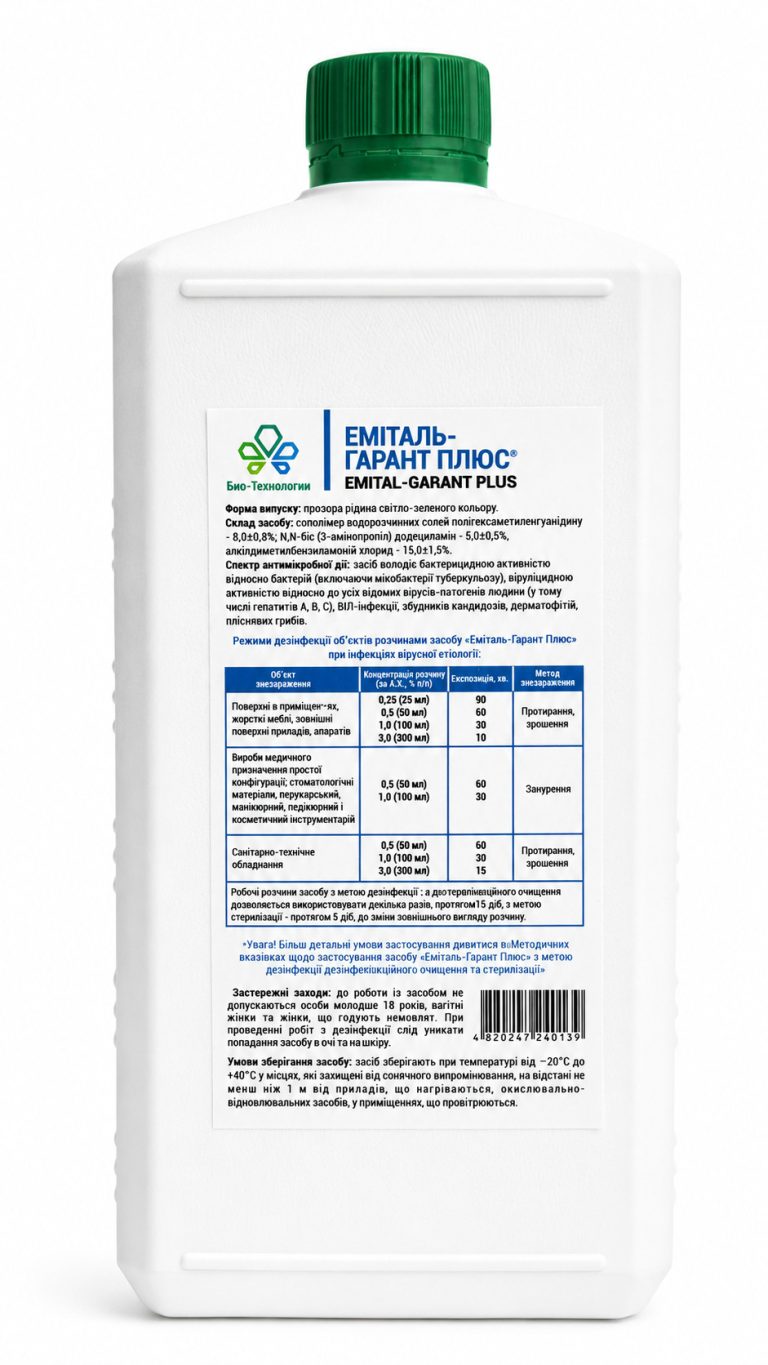
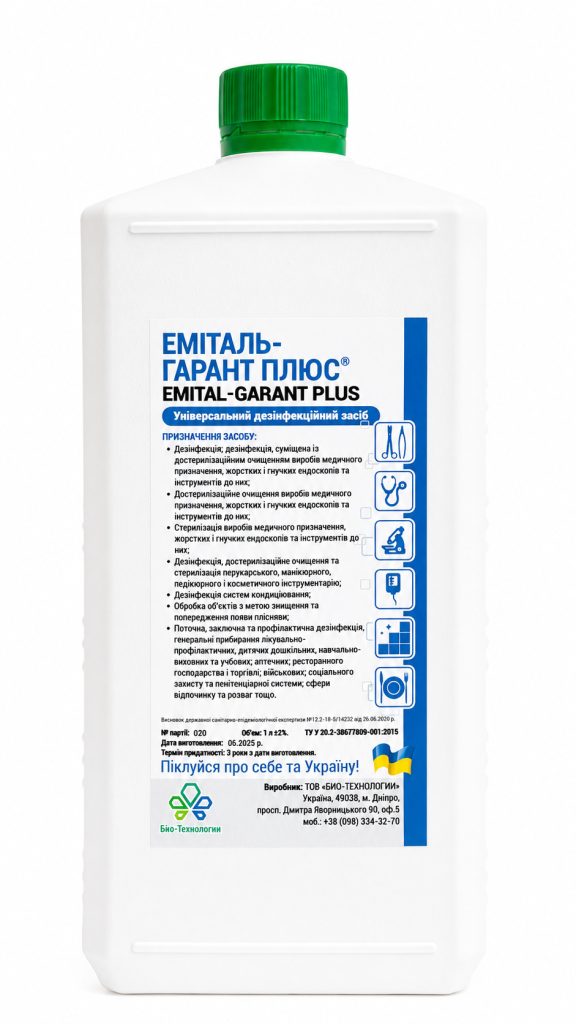
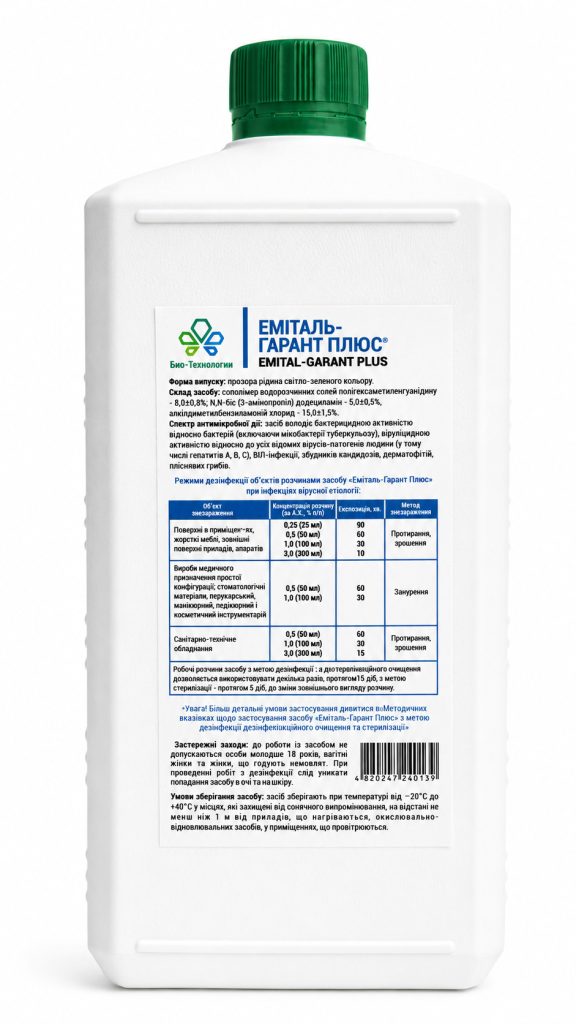
Full name of the product. Disinfectant “Emital-Guarant Plus” (hereinafter referred to as the product)
Manufacturer: BIO-TECHNOLOGIES LLC according to TU U 20.2-38677809-001:2015.
Composition of the product, content of active and auxiliary substances, wt.%: active substances – copolymer of water-soluble polyhexamethylene guanidine salts – 8.0±0.8%; N,N-bis(3-aminopropyl)dodecylamine – 5.0±0.5%; alkyldimethylbenzylammonium chloride – 15.0±1.5%.
Form of release and physicochemical properties of the product. “Emital-Guarant Plus” is a transparent light-green liquid. The product mixes well with water; the pH of the concentrate is 10.5. Solutions of the product have detergent, deodorizing and anticorrosive properties; they remove mechanical, protein and fat contamination, blood residues and medicinal product residues from external surfaces, internal channels and cavities of medical devices and equipment. Solutions of the product do not damage treated surfaces (including metals, polymers, wood, glass, rubber, tile, faience and surfaces of medical equipment with paint, galvanic, polymer and other coatings); do not discolor fabrics or reduce their strength; and do not fix blood or other protein contamination. The product is stable at temperatures from -20ºC to +40ºC. The product is not classified as combustible or fire-hazardous; it is incompatible with soaps and anionic surfactants. The product has a residual antimicrobial effect.
Intended use of the product. “Emital-Guarant Plus” is intended for:
– preventive and focal (current, final) disinfection and general cleaning at facilities of all categories, including:
– – healthcare and treatment-and-prevention institutions (operating units, intensive care and resuscitation departments, surgical, therapeutic, obstetric, neonatal, gynecological, maternity, pediatric, physiotherapy, dental, dermatovenerological, pathological anatomy and other departments; outpatient clinics, polyclinics, dispensaries, feldsher-midwife stations, organ transplantation centers, medical units, emergency medical stations, donor centers and blood transfusion departments, sanatoriums, preventive treatment facilities, clinical, biochemical, bacteriological, virological, serological and other laboratories, catering units, etc.);
– – pharmacy institutions (pharmaceutical warehouses, pharmacies, pharmacy stores, etc.);
– – preschool institutions, educational and training institutions of various accreditation levels;
– – enterprises of the perfumery and cosmetics, pharmaceutical, chemical, microbiological and food-processing industries;
– – public catering and trade establishments (restaurants, markets, etc.);
– – public utility and household service facilities (hotels, dormitories, campsites, apartments, hairdressing salons, beauty salons, cosmetology, manicure and pedicure rooms, piercing and tattoo salons, solariums, bathhouses, saunas, swimming pools, sports halls, cinemas, theaters, laundries, etc.);
– – rolling stock and support facilities (railway stations, airports, etc.) of road, rail, water and air transport (passenger transport, sanitary transport, food transport, waste transport, etc.);
– – sanitary inspection rooms, penitentiary institutions and military units;
– – enterprises for the collection, transportation and processing of waste (waste containers, household waste transport, etc.);
– – water supply and sewerage facilities;
– – cleaning companies;
– – plants, factories, warehouses and storage facilities, including paper archives, library repositories, premises for storing grain, food, medicinal products, hygiene items, agricultural facilities, etc.;
– – public toilets and portable toilets;
– – other epidemiologically significant facilities whose activities require disinfection work in accordance with applicable sanitary, hygienic and anti-epidemic standards and rules and regulatory documents;
– disinfection of medical devices (including rigid and flexible endoscopes and instruments for them; individual elements and component parts of anesthesia and respiratory equipment; probes of all types; incubators for premature infants; surgical and dental instruments, including rotary and locking instruments; saliva ejectors; dental impressions made of alginate, silicone and polyester resin; dental prosthetic workpieces made of metal, ceramic and plastic, articulators);
– disinfection combined with manual pre-sterilization cleaning of medical devices (including rigid and flexible endoscopes and instruments for them);
– disinfection, combination of disinfection and pre-sterilization cleaning processes, as well as chemical sterilization of hairdressing, manicure, pedicure and cosmetic instruments and accessories at consumer service enterprises;
– manual and mechanized pre-sterilization cleaning of medical devices (including rigid and flexible endoscopes and instruments for them) using ultrasound (in units such as “Medel”, “Ultraest”, “Kristall-5”, “Serga”, etc.) and in specialized endoscope processing units (such as “KRONT-UDE”, etc.);
– high-level disinfection of rigid and flexible endoscopes and instruments for them and anesthesia and respiratory equipment;
– sterilization of medical devices (including rigid and flexible endoscopes and anesthesia and respiratory equipment);
– current and general cleaning in treatment-and-prevention institutions (including neonatal departments and maternity hospitals), children’s institutions and other facilities;
– disinfection and simultaneous washing of indoor surfaces, equipment, hard furniture, sanitary equipment, linen, utensils (laboratory and tableware), cleaning tools, patient care items, personal hygiene items, toys, etc.;
– decontamination of disposable medical devices and used materials (suture, dressing materials, etc.) before disposal;
– decontamination of biological, food and other waste (blood, urine, feces, sputum, wash water, vomit, liquid waste, etc.);
– disinfection and simultaneous washing of process equipment at enterprises of the pharmaceutical, microbiological, perfumery and cosmetics, food and processing industries;
– decontamination of refuse chutes, waste collection containers, etc.;
– disinfection of air-conditioning systems and room ventilation in treatment-and-prevention and children’s institutions; residential and office premises; household and municipal service enterprises, etc.;
– disinfection of indoor air.
Spectrum of antimicrobial activity. The product has antimicrobial activity against Gram-negative and Gram-positive bacteria (including Mycobacterium tuberculosis and Legionella), viruses (including pathogens of parenteral hepatitis, HIV infection, poliomyelitis and avian influenza A/H5N1), and fungi (pathogens of candidiasis and dermatophytosis). The product has sporicidal activity.
Toxicity and safety of the product. According to acute toxicity parameters under GOST 12.1.007-76, when administered into the stomach the product belongs to hazard class 3 (moderately hazardous substances); when applied to the skin and inhaled at saturating concentrations according to the degree of volatility, to hazard class 4 (low-hazard substances); and when administered parenterally, to hazard class 4 (low-hazard substances). In aerosol form, it causes irritation of the mucous membranes of the upper respiratory tract; it has a moderate local irritating effect on the skin and mucous membranes of the eyes.
The product has no cumulative or sensitizing effect.
| There are no data |
Similar products
"Amilox Plus" is a concentrated disinfectant with detergent, wetting, deodorizing and emulsifying properties. It is intended for disinfection, pre-sterilization cleaning and sterilization of medical devices, surfaces, equipment, tools and other epidemiologically significant objects.
"Emital-Protect Maxi" is a ready-to-use alcohol-based disinfectant for hygienic and surgical hand antisepsis, skin treatment and glove decontamination. It is also suitable for rapid disinfection of small alcohol-resistant surfaces, equipment and instruments.
"Lumax-Chlor 1000" is a chlorine-based tablet disinfectant with detergent, wetting and bleaching properties. It is intended for disinfection of surfaces, medical devices, utensils, linen, water, tools and other objects.
"Lumax-Profi Maxi" is a ready-to-use alcohol-based antiseptic and disinfectant for hands, skin and gloves. It is suitable for rapid treatment of small alcohol-resistant surfaces and medical, hairdressing and cosmetology instruments.
"Emital-Guarant Plus" is a concentrated disinfectant with detergent, deodorizing and anticorrosive properties. It is used for disinfection, pre-sterilization cleaning, sterilization of medical devices, and treatment of surfaces, equipment, tools and indoor air.
"Lumax-Chlor Light" is a chlorine-based tablet product for preparing working disinfectant solutions. It is used for treatment of surfaces, medical devices, utensils, linen, water, equipment, tools and other epidemiologically significant objects.
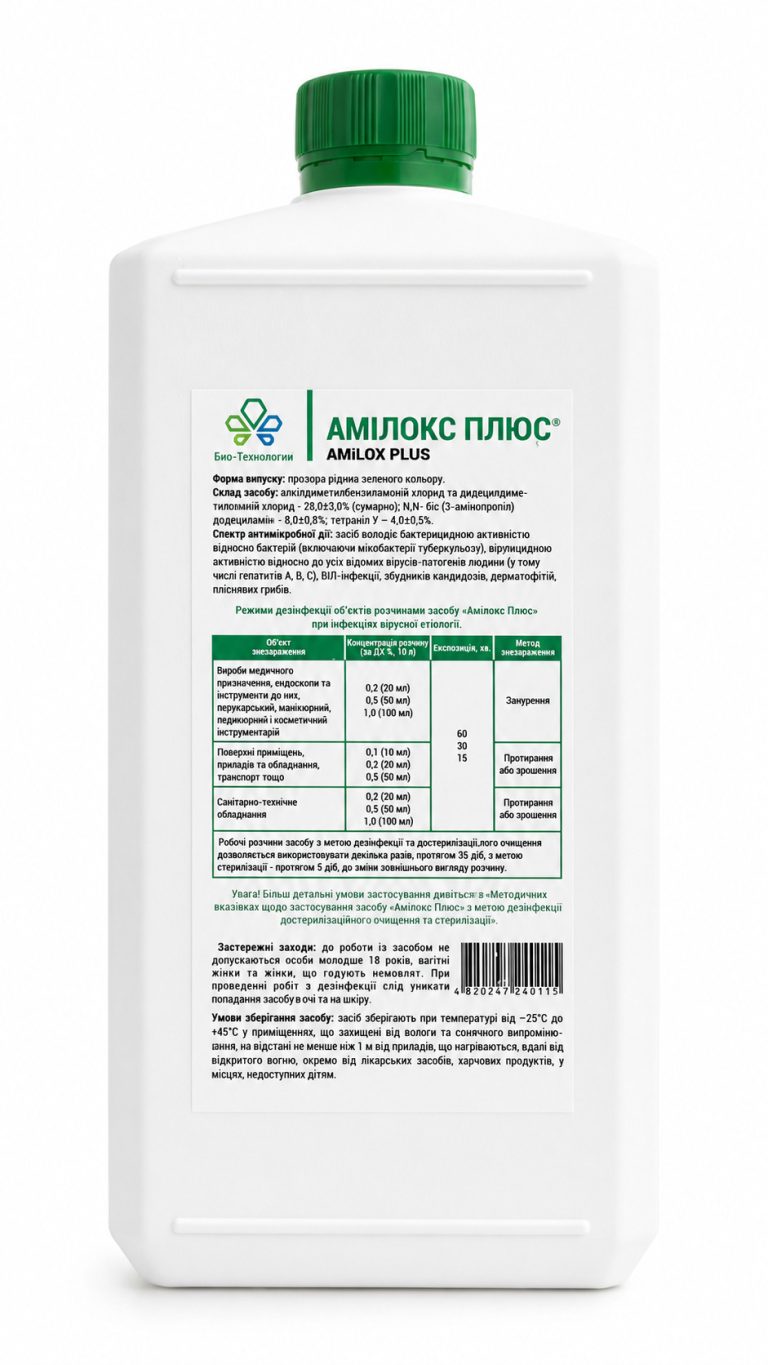
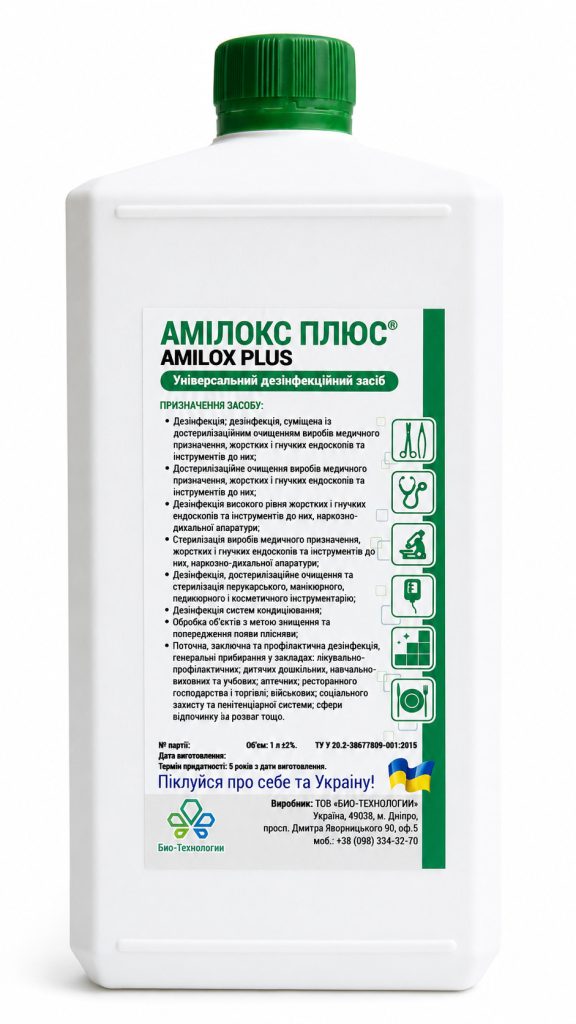
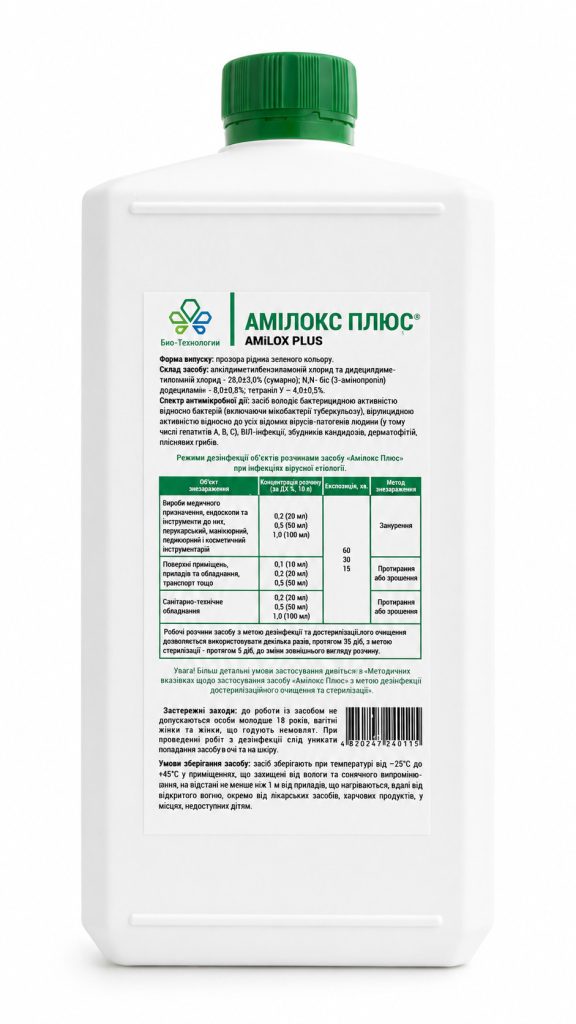
Full name of the product. Disinfectant “Amilox Plus” (hereinafter referred to as the product)
Manufacturer: BIO-TECHNOLOGIES LLC, according to TU U 20.2-38677809-001:2015.
Composition of the product, content of active and auxiliary substances, wt.%: alkyldimethylbenzylammonium chloride and didecyldimethylammonium chloride – 28.0±3.0% (total); N,N-bis(3-aminopropyl)dodecylamine – 8.0±0.8%; Tetranyl U – 4.0±0.5% (active substances); functional and technological components (auxiliary substances).
Form of release and physicochemical properties of the product. “Amilox Plus” is a transparent green liquid with a slight characteristic odor. The product mixes well with water. The pH of the product is 11.0±1.5. Aqueous solutions of the product are transparent and almost odorless.
Solutions of the product have detergent, wetting, deodorizing and emulsifying properties, which makes it possible to combine disinfection and cleaning processes.
Solutions of the product do not exhibit corrosive activity toward stainless steel, aluminum alloys and other metals, nickel-plated, chrome-plated and other protective coatings.
Solutions of the product do not damage treated objects made of various materials (including corrosion-resistant and non-corrosion-resistant metals, wood, glass, tile, porcelain, faience, rubber, caoutchouc, artificial leather, polymeric materials, surfaces of medical devices and equipment with paint, galvanic and polymer coatings); do not discolor fabrics or reduce their strength; do not fix blood and other organic contaminants. They remove mechanical, protein and fat contamination, blood residues and medicinal product residues from external surfaces, internal channels and cavities of medical devices, and homogenize sputum and other secretions. Working solutions of the product rinse off well and do not leave deposits or stains on the surfaces of treated objects.
The product is incompatible with soaps and anionic surfactants.
The product retains its properties after freezing to -25ºC and subsequent thawing.
The product and its solutions are environmentally safe; they are not classified as combustible, fire-hazardous or explosive.
Intended use of the product. “Amilox Plus” is intended for:
– preventive and focal (current, final) disinfection at facilities of all categories, including:
– – medical and treatment-and-prevention institutions (including operating units, intensive care and resuscitation departments, surgical, somatic, therapeutic, obstetric, neonatal, gynecological, maternity, pediatric, physiotherapy, dental, dermatovenerological, infectious disease, pathological anatomy and other departments; outpatient clinics, polyclinics, dispensaries, feldsher-midwife stations, organ transplantation centers, medical units, emergency medical stations, donor centers and blood transfusion departments, sanatoriums, preventive treatment facilities, clinical, biochemical, bacteriological, virological and other laboratories, catering units, etc.);
– – sanitary inspection rooms, penitentiary institutions and military units;
– – pharmacy institutions (pharmaceutical warehouses, pharmacies, pharmacy stores, etc.);
– – preschool institutions, educational and training institutions of various accreditation levels;
– – enterprises of the perfumery and cosmetics, pharmaceutical, chemical, microbiological, food and processing industries;
– – hotel and trade establishments (restaurants, cafés, buffets, canteens, confectionery workshops, markets, shops and supermarkets, etc.);
– – public utility and household service facilities (cinemas, hotels, dormitories, campsites, hairdressing salons, beauty salons, cosmetology, manicure and pedicure rooms, piercing and tattoo salons, solariums, bathhouses, saunas, swimming pools, sports halls, cinemas, theaters, laundries, funeral service facilities, etc.);
– – rolling stock and support facilities (railway stations, airports, etc.) of road, rail, water and air transport (passenger transport, sanitary transport, food transport, waste transport, etc.);
– – public toilets and portable toilets;
– – enterprises for the collection, transportation and processing of waste (waste containers, household waste transport, etc.);
– – water supply and sewerage facilities;
– – cleaning companies;
– – plants, factories, warehouses and storage facilities, including paper archives, library repositories, premises for storing grain, food, medicinal products, hygiene items, agricultural facilities, etc.;
– – other epidemiologically significant facilities whose activities require disinfection work in accordance with applicable sanitary, hygienic and anti-epidemic standards and rules and regulatory documents;
– current and general cleaning in treatment-and-prevention institutions (including neonatal departments and maternity hospitals), children’s institutions and other facilities;
– disinfection of indoor surfaces, equipment, hard furniture, sanitary equipment, linen, utensils (laboratory and tableware), cleaning tools, patient care items, personal hygiene items, toys, etc.;
– disinfection of medical waste; blood, sputum and other biological fluids and secretions; disposable medical devices; containers for their collection and transportation;
– disinfection of medical devices (including rigid and flexible endoscopes and instruments for them; individual elements and component parts of anesthesia and respiratory equipment; probes of all types; chambers for storing sterile instruments; incubators for premature infants; surgical and dental instruments, including rotary and locking instruments; saliva ejectors; dental impressions made of alginate, silicone and polyester resin; dental prosthetic workpieces made of metal, ceramic and plastic, articulators);
– disinfection combined with manual pre-sterilization cleaning of medical devices (including rigid and flexible endoscopes and instruments for them);
– disinfection, combination of disinfection and pre-sterilization cleaning processes, as well as sterilization of hairdressing, manicure, pedicure and cosmetic instruments and accessories at service enterprises;
– manual and mechanized pre-sterilization cleaning of medical devices (including rigid and flexible endoscopes and instruments for them) using ultrasound (in units such as “Medel”, “Ultraest”, “Kristall-5”, “Serga”, etc.) and in specialized endoscope processing units (such as “KRONT-UDE”, etc.);
– high-level disinfection of rigid and flexible endoscopes and instruments for them and anesthesia and respiratory equipment;
– sterilization of medical devices (including rigid and flexible endoscopes and anesthesia and respiratory equipment);
– disinfection of air-conditioning systems and room ventilation in treatment-and-prevention and children’s institutions; residential and office premises; household and municipal service enterprises, etc.:
– – surfaces of air conditioners and structural elements of indoor air-conditioning systems;
– – air-cleaning and cooling chambers of air conditioners;
– – surfaces of fans in room ventilation systems;
– – air ducts of room ventilation systems;
– – used filter elements of air conditioners and room ventilation systems;
– disinfection of indoor air.
Spectrum of antimicrobial activity. The product has bactericidal activity against Gram-negative and Gram-positive bacteria (including Mycobacterium tuberculosis and Legionella), virucidal activity against all known human pathogenic viruses (including pathogens of enteral and parenteral hepatitis, including hepatitis A, B and C, HIV infection, poliomyelitis, adenoviruses, enteroviruses, rotaviruses, SARS viruses, influenza, herpes, avian influenza A/H5N1, human influenza A/H1N1/Moscow/2009, etc.), fungicidal activity (including pathogens of candidiasis, dermatophytosis and molds, including Aspergillus niger and Mucor spp.), activity against pathogens of anaerobic infections and particularly dangerous infections (plague, tularemia, cholera, anthrax); and sporicidal activity.
Toxicity and safety of the product. According to acute toxicity parameters under GOST 12.1.007-76, “Amilox Plus”, when administered into the stomach, belongs to hazard class 3 (moderately hazardous substances); when applied to the skin and inhaled at saturating concentrations, to hazard class 4 (low-hazard substances); and when administered parenterally, to hazard class 4 (low toxicity). In aerosol form, it causes irritation of the mucous membranes of the upper respiratory tract. The product has a moderate local irritating effect on the skin and mucous membranes of the eyes.
The product has no cumulative or sensitizing effect and does not exhibit mutagenic, embryotoxic, teratogenic, carcinogenic or gonadotropic properties.
Working solutions of the product do not cause skin irritation or sensitization.
When working solutions of the product with a concentration above 2% are applied by spraying, irritation of the mucous membranes of the eyes and upper respiratory tract may occur.
| There are no data |
Similar products
"Lumax-Profi Maxi" is a ready-to-use alcohol-based antiseptic and disinfectant for hands, skin and gloves. It is suitable for rapid treatment of small alcohol-resistant surfaces and medical, hairdressing and cosmetology instruments.
"Emital-Guarant Plus" is a concentrated disinfectant with detergent, deodorizing and anticorrosive properties. It is used for disinfection, pre-sterilization cleaning, sterilization of medical devices, and treatment of surfaces, equipment, tools and indoor air.
"Emital-Protect Maxi" is a ready-to-use alcohol-based disinfectant for hygienic and surgical hand antisepsis, skin treatment and glove decontamination. It is also suitable for rapid disinfection of small alcohol-resistant surfaces, equipment and instruments.
"Lumax-Chlor 1000" is a chlorine-based tablet disinfectant with detergent, wetting and bleaching properties. It is intended for disinfection of surfaces, medical devices, utensils, linen, water, tools and other objects.
"Amilox Plus" is a concentrated disinfectant with detergent, wetting, deodorizing and emulsifying properties. It is intended for disinfection, pre-sterilization cleaning and sterilization of medical devices, surfaces, equipment, tools and other epidemiologically significant objects.
"Lumax-Chlor Light" is a chlorine-based tablet product for preparing working disinfectant solutions. It is used for treatment of surfaces, medical devices, utensils, linen, water, equipment, tools and other epidemiologically significant objects.